Commons talk:AI-generated media
|
|

Possibly of future laws
I am just gonna bring this up for all ai generated media for Wikimedia.
In March of this year Tennessee passed the Elvis Act. Making it a crime to copy a musician’s voice without permission. Also there is this.
Yes I know this is all very recent but I do think Wikimedia should be cautious. Because it seems new laws can harm Wikipedia’s usage of ai generated media.CycoMa1 (talk) 19:07, 14 April 2024 (UTC)
- There's also a a bipartisan bill in the United States that would require the labeling of AI-generated videos and audio. Although I don't think it's passed yet, but I think that's probably the direction we are going in. It would be interesting to know how something that like could even be enforced on Commons if such a bill ever passes though. Probably the only way to is by banning AI generated content in some way, if not just totally banning it outright. --Adamant1 (talk) 12:53, 18 April 2024 (UTC)
- The only way to label AI generated videos is to ban them? That's deeply confusing.--Prosfilaes (talk) 14:12, 18 April 2024 (UTC)
- I know your just taking what I said out of context, but that's why I said it would be interesting to know how something like that could be enforced. I don't know what else we can do other then ban AI generated videos if there's no way workable way to label them as such though. Of course we could include said information in the file description, but then it sounds like at least the bill I linked to would require the files themselves to be digitally watermarked as AI generated, which of course would have no control over. And that's probably where the banning would come into play. Not that I think your question was genuine in the first place though. Otherwise, what's your proposed way to enforce such a law if one were to be passed other then banning AI generated videos that don't contain the digital watermarking? --Adamant1 (talk) 14:45, 18 April 2024 (UTC)
- Well, we can label them: If no comprehensible provenance can be provided - it´s treated as AI content. Alexpl (talk) 15:11, 18 April 2024 (UTC)
- Perhaps I was taking it in the exact context it was provided in, one that made no mention of digital watermarking in the video. Moreover, if such a thing is required, most reputable sources will provide it in the first place. We could add digital watermarking ourself, and yes, a ban on videos that don't have digital watermarking is possible. Note that you jumped to "just totally banning it outright", instead of requiring or adding labels.
- And Commons:Assume good faith.--Prosfilaes (talk) 15:29, 18 April 2024 (UTC)
- I'd buy that, but my comment was made in the context of the article about the bill which pretty clearly mentions how it would require digitally watermarking videos. It's not on me that you didn't read said article before replying to my message. Also in no way did I "jump" to just totally banning it outright. I pretty clearly said "Probably banning it in someway." That's obviously not "totally banning it outright." Although totally banning it is an option in absence of anything else. But nowhere did I say that should be the only or main solution. It's kind of hard to assume good faith when your taking my comment out of context and reading negative intent behind it that isn't even there to begin with. --Adamant1 (talk) 15:46, 18 April 2024 (UTC)
- Meh, if Commons can find ways to get around 18 USC 2257 then this shouldn't be an issue Trade (talk) 22:58, 20 April 2024 (UTC)
- In case anyone else was wondering what Trade is referring to:
- • 18 USC 2257 [house.gov]
- • Child Protection and Obscenity Enforcement Act [enwiki]
- What User:Trade meant by their comment and how this bill relates to Commons, I can't even begin to speculate.
- – ⓣⓡⓢ⑨ⓚ 02:23, 24 April 2025 (UTC)
- Meh, if Commons can find ways to get around 18 USC 2257 then this shouldn't be an issue Trade (talk) 22:58, 20 April 2024 (UTC)
- I'd buy that, but my comment was made in the context of the article about the bill which pretty clearly mentions how it would require digitally watermarking videos. It's not on me that you didn't read said article before replying to my message. Also in no way did I "jump" to just totally banning it outright. I pretty clearly said "Probably banning it in someway." That's obviously not "totally banning it outright." Although totally banning it is an option in absence of anything else. But nowhere did I say that should be the only or main solution. It's kind of hard to assume good faith when your taking my comment out of context and reading negative intent behind it that isn't even there to begin with. --Adamant1 (talk) 15:46, 18 April 2024 (UTC)
- I know your just taking what I said out of context, but that's why I said it would be interesting to know how something like that could be enforced. I don't know what else we can do other then ban AI generated videos if there's no way workable way to label them as such though. Of course we could include said information in the file description, but then it sounds like at least the bill I linked to would require the files themselves to be digitally watermarked as AI generated, which of course would have no control over. And that's probably where the banning would come into play. Not that I think your question was genuine in the first place though. Otherwise, what's your proposed way to enforce such a law if one were to be passed other then banning AI generated videos that don't contain the digital watermarking? --Adamant1 (talk) 14:45, 18 April 2024 (UTC)
- The only way to label AI generated videos is to ban them? That's deeply confusing.--Prosfilaes (talk) 14:12, 18 April 2024 (UTC)
AI content taken from the web
There have been a few cases where an image on the web is described in some general way as having been AI-generated, leading someone to upload a copy to Commons as {{PD-algorithm}}, the template asserting that it is the work of a computer algorithm or artificial intelligence and does not contain sufficient human authorship to support a copyright claim
. For example, File:Facebook AI slop, "Shrimp Jesus" 1.jpg, an image used in a few news sources that describe it as AI-generated content from social media.

This generally ignores two potential issues: that the image could have been created in a country where AI works have some copyright protection, and that the image might not actually be 100% algorithmic (it could be based on a human-made source image, or have been manually edited afterwards in some way).
Should this guideline take a clear and strict stance on Commons only ever hosting pre-existing images when the creator has confirmed which country they are working in, and explicitly stated that the work was 100% AI-generated? Or can we take a more relaxed approach within COM:PRP, if the chances are relatively low of there being a problem? Belbury (talk) 12:03, 4 October 2024 (UTC)
- Any opinions on this?
- Commons:Deletion requests/File:The Voidz - Like All Before You.png, an album cover that's AI-generated but we don't know the details, took three months to be deleted, having gotten two strong !votes for keeping it on the grounds that if the musician says AI was used then the artwork must be public domain.
- Would be good to have a consensus and a guideline shortcut for whatever line Commons wants to draw on this, so that these DRs aren't difficult to close. Belbury (talk) 10:55, 10 December 2024 (UTC)
- I think it was wrongly decided. Pinging @Abzeronow as closer. Certainly in scope (cover of notable album); from the U.S., where AI-generated work is not copyrighted. If it was simultaneously (meaning within 30 days) published in the U.S. and elsewhere, which I presume is the case, I'm pretty sure we don't care what other countries it was published in, or where the artist was from. A person closely associated with the publication, Julian Casablancas, says it is AI work. I don't think it is our job to doubt some person or organization who says, effectively, "this was the work of an algorithm and we have no copyright claim here" when clearly no one else can have a claim. Clearly if they came back later and said "just kidding" and tried to pursue a copyright claim, no court would say someone had infringed a copyright by taking them at their word. - Jmabel ! talk 16:14, 10 December 2024 (UTC)
- When Commons files an image as {{PD-algorithm}}, we're reassuring the potential reuser that the image is public domain because it
does not contain sufficient human authorship to support a copyright claim
. I'd say it was Commons' job to perform due diligence to verify this. If all we come back with is "the artist said AI was used" or "the press are calling it AI-generated", then we don't know how much human authorship was involved. Belbury (talk) 17:34, 10 December 2024 (UTC)
- When Commons files an image as {{PD-algorithm}}, we're reassuring the potential reuser that the image is public domain because it
- I'm not sure there is a lot to generalize from here, though. This is a pretty unusual case. - Jmabel ! talk
- I think it was wrongly decided. Pinging @Abzeronow as closer. Certainly in scope (cover of notable album); from the U.S., where AI-generated work is not copyrighted. If it was simultaneously (meaning within 30 days) published in the U.S. and elsewhere, which I presume is the case, I'm pretty sure we don't care what other countries it was published in, or where the artist was from. A person closely associated with the publication, Julian Casablancas, says it is AI work. I don't think it is our job to doubt some person or organization who says, effectively, "this was the work of an algorithm and we have no copyright claim here" when clearly no one else can have a claim. Clearly if they came back later and said "just kidding" and tried to pursue a copyright claim, no court would say someone had infringed a copyright by taking them at their word. - Jmabel ! talk 16:14, 10 December 2024 (UTC)

- I imagine the arguments would be similar if I nominated some web-found content like File:Facebook AI slop, "Shrimp Jesus" 1.jpg for deletion: it's obviously AI, and we have a source describing it as such. We just have no specifics of how or where the image was made. Is it reasonable for Commons to host the image as public domain, in that situation? --Belbury (talk) 17:55, 10 December 2024 (UTC)
- Uploading found images is increasing as AI imagery becomes more common in online discourse: Commons:Deletion requests/File:Roman salute by Adrian Dittmann.jpg is a particularly silly example this week where someone's uploaded a "public interest" social media image, tagging it as having been AI-generated by Grok because that seemed very likely from context (it was posted to X by an Elon Musk supporter account), only to realise the next day that it was a CGI still from a 2007 movie.
- "Has someone other than the uploader described it as AI" is a question that should have occurred to me earlier on that DR. But it's unclear what the minimum criteria actually is for Commons, when deciding whether an image meets {{PD-algorithm}}. --Belbury (talk) 10:03, 23 January 2025 (UTC)
- Another case at Commons:Deletion requests/File:Se Acabó la Fiesta logo.png of an organisation that has a logo that definitely looks like AI. Obviously this is becoming more common.
- Is "looks like AI" enough for Commons to put the
does not contain sufficient human authorship to support a copyright claim
template and release it explicitly into the public domain, or not? Belbury (talk) 17:01, 17 June 2025 (UTC)


For reference, I've started filing these in Category:Unconfirmed AI-generated images when I notice any. --Belbury (talk) 12:36, 6 December 2025 (UTC)
- Why did you create a new category instead of using the existing Category:Unconfirmed likely AI-generated images to check? I've linked it below – what's the difference? If there is none, I suggest merging/redirecting. Prototyperspective (talk) 15:20, 6 December 2025 (UTC)
- Good question! I hadn't considered that one when creating it. What's the inclusion criteria for that category? Cases where an uploader simply claims "own work", yet the image looks suspiciously AI generated?
- The category I've created (it could probably use a better name) is for kind of the opposite situations, where the uploader has seen an image that someone else has made and decided that it must be AI, therefore Commons can host it. That can be a possibly subjective call on album art like File:Passo Bem Solto artwork.jpg (which I've just asked the uploader to clarify), or "confirmed" images like File:Facebook AI slop, "Shrimp Jesus" 1.jpg which have verifiably appeared in the media as an example of AI-generated content, but not in a way that allows us to actually confirm that it meets our {{PD-algorithm}} terms of lacking
sufficient human authorship to support a copyright claim
and it not being made by a resident of the UK or Hong Kong. Belbury (talk) 15:58, 6 December 2025 (UTC)- Inclusion criteria is that of the title: (1) Unconfirmed to be AI-generated (2) seems likely to be AI-generated. Thanks for the explanation, so I think it needs a better title so as to be distinguishable from the cat I linked and probably both cats should link to each other via see-alsos. Prototyperspective (talk) 15:33, 8 December 2025 (UTC)
- Hatnotes added. How about Category:Third-party content assumed to be AI? Belbury (talk) 15:47, 16 February 2026 (UTC)
- Sounds good. I don't think "assumed" is the best wording there as there could be good reasons for it in which case it's not an assumption (but a conclusion), but couldn't yet think of a better name – maybe 'Third-party content made with AI (unconfirmed)'...it could be moved/renamed later on anyway. I'd just suggest to add an explanatory category description. Prototyperspective (talk) 16:05, 16 February 2026 (UTC)
- Renamed, and there was already a description up. I think "assumed" works: if the rationale (from the uploader or from the web source) for it being fully public domain AI involves any steps of assumption, then it might not be and we may want to be cautious about it. Belbury (talk) 17:59, 16 February 2026 (UTC)
- Sounds good. I don't think "assumed" is the best wording there as there could be good reasons for it in which case it's not an assumption (but a conclusion), but couldn't yet think of a better name – maybe 'Third-party content made with AI (unconfirmed)'...it could be moved/renamed later on anyway. I'd just suggest to add an explanatory category description. Prototyperspective (talk) 16:05, 16 February 2026 (UTC)
- Hatnotes added. How about Category:Third-party content assumed to be AI? Belbury (talk) 15:47, 16 February 2026 (UTC)
- Inclusion criteria is that of the title: (1) Unconfirmed to be AI-generated (2) seems likely to be AI-generated. Thanks for the explanation, so I think it needs a better title so as to be distinguishable from the cat I linked and probably both cats should link to each other via see-alsos. Prototyperspective (talk) 15:33, 8 December 2025 (UTC)

What shouldn't AI-generated content be used for - revisited!
I've brought this issue up before, but it's been a bit and I think we've had some time to see how deletion discussions play out in practice (cf. Category:AI-generation related deletion requests).
Can we revisit the idea of adding some guidance discouraging (but not forbidding) the upload of some AI-generated images which are very likely to be deleted? For instance, images falling into the previously described category of "technical and scientific diagrams" are almost always deleted, since they're invariably nonsense. There's no indication that AI models are getting any better at generating meaningful images of this type - just better-looking nonsense - so unless/until that changes, we should advise users against trying. Omphalographer (talk) 22:52, 13 November 2024 (UTC)
- Yes. We could have a section here precisely on stuff where exclusion of AI-generated content isn't a matter of principle, but a matter that virtually none of what we've seen passes muster; list open to review if people actually can present examples that don't have problems. - Jmabel ! talk 20:20, 14 November 2024 (UTC)
- I'm not sure how to word it, but it might also be appropriate to caution users about using AI-generated images to illustrate culturally sensitive topics. One such topic I've seen a couple of instances of recently is AI-generated images of religious or mythological figures, especially ones from cultures which the image model is unlikely to be familiar with (e.g. Yoruba deities). Educational needs will always be better served by artistic depictions created by people immersed within the culture, not an AI trying to imitate it based on a textual description. Omphalographer (talk) 06:09, 10 December 2024 (UTC)
- There seems to be some admin consensus to delete "personal image" AI uploads under COM:F10, which may be worth a mention somewhere. This is where the user has "no constructive global contributions" and there's no apparent intention to use the image on any project.
- Other categories of upload I've seen that always seems to result in an undisputed deletion:
- Images where we already have good quality photographs of the subject, which the AI isn't improving on
- Historical figures, especially those where we don't even know what they looked like
- Specific cities, which might get the vibe right but never the details
- Maps, which look superficially plausible but fail in the details and are often labelled at random with mild gibberish
- AI upscaling of paintings
- Bad AI upscales where an off-the-shelf eyes-and-mouth upscaler like MyHeritage doesn't understand what glasses are, and does something very wrong
- Belbury (talk) 09:27, 10 December 2024 (UTC)
, especially those
should be removed. Also a note that photographs may show something that is also in the AI image, but one shouldn't too quickly assume the AI image shows only that just because it shows also that. I think some may get that wrong. If it's just showing the Eiffel tower or a few pigs, then it may be duplicate but if it shows a smaller-sized Eiffel-tower made out of wood and people taking pigs attached to leashes for a walk then that's not the same subject as what's in the photo etc. Prototyperspective (talk) 12:55, 10 December 2024 (UTC)- Perhaps even expand "historical figures" to images of any particular person. Living people are better represented by photos; historical figures are better represented by contemporary photos or artwork (or other historical artwork if nothing contemporary is available). I have yet to hear of any situation where there's a compelling case for using an AI-generated image to represent a specific person, outside of obviously special cases like demonstrations of AI image generation. Omphalographer (talk) 21:19, 10 December 2024 (UTC)
- When there is no photo for example. A large fraction of art (of conventional type but also of more recent types) is about people such as social criticism, societally relevant art, historic recreations, etc and there is no reason to censor it all away. Prototyperspective (talk) 22:27, 10 December 2024 (UTC)
- I'm not sure I follow. Keep in mind that what I'm proposing here is a set of suggestions to users, not hard-and-fast rules. They're meant to guide users away from common pitfalls in the use of image-generating AIs - in this case, "I can't find a freely licensed picture of this person, I'm going to ask an AI to magic one up instead". There will be exceptions, and that's okay - but we expect them to be uncommon. Omphalographer (talk) 23:28, 10 December 2024 (UTC)
- Ok that makes sense. Maybe these could include the recommendation to in any case first search for already-existing images about the subject. Prototyperspective (talk) 23:32, 10 December 2024 (UTC)
- Wikiprojects which don't allow fair use would probably be fine with magic AI versions - Category:Portraits (Les sans images) was a project from the French Wikipedia a few years ago that used amateur sketches of subjects, some not very recognisable, where no free photo was available. I'm surprised that we aren't seeing more AI images from that direction, really. Belbury (talk) 09:39, 11 December 2024 (UTC)
- (Speak of the devil, Category:Images generated by Grok has since had five plausible-but-AI images of Spanish celebrities added to it.) Belbury (talk) 11:39, 12 December 2024 (UTC)
- Yuck. These seem really hard to justify - if I'm not mistaken, all of the people depicted have a fairly high public profile (e.g. actors, musicians, newscasters, etc), and shouldn't be unusually difficult to source photographs of. Omphalographer (talk) 21:38, 12 December 2024 (UTC)
- (Speak of the devil, Category:Images generated by Grok has since had five plausible-but-AI images of Spanish celebrities added to it.) Belbury (talk) 11:39, 12 December 2024 (UTC)
- I see no good reason to open Pandora's box by encouraging uploads of historical, and/or, worse, religious figures created by AI, just because there is "no photo" and calling it AI "Art" could provide one. Alexpl (talk) 22:54, 12 December 2024 (UTC)
- I'm not sure I follow. Keep in mind that what I'm proposing here is a set of suggestions to users, not hard-and-fast rules. They're meant to guide users away from common pitfalls in the use of image-generating AIs - in this case, "I can't find a freely licensed picture of this person, I'm going to ask an AI to magic one up instead". There will be exceptions, and that's okay - but we expect them to be uncommon. Omphalographer (talk) 23:28, 10 December 2024 (UTC)
- When there is no photo for example. A large fraction of art (of conventional type but also of more recent types) is about people such as social criticism, societally relevant art, historic recreations, etc and there is no reason to censor it all away. Prototyperspective (talk) 22:27, 10 December 2024 (UTC)
- Extremely late reply, but another type of AI-generated image I've recently nominated a ton of for deletion are faux-historical images, e.g. images generated in the style of tintype photos, oil paintings, etc. Outside of demonstrations of image models (which should be rare), I don't think these types of images ever have any legitimate educational use - they're inherently misleading. Omphalographer (talk) 05:35, 24 June 2025 (UTC)
- I must have missed those. Are they still easy to spot (like "ripped Phytagoras" a.o.) or already photorealistic? Alexpl (talk) 10:45, 24 June 2025 (UTC)
- Variable. The fake "photos" tend to be implausibly sharp and often have bits of stray color which can't be explained as traditional colorization. The "paintings" can be hard to identify without contextual hints (e.g. other AI-generated uploads by the same user, lack of a title or artist, wrong style for the period, etc). Omphalographer (talk) 15:05, 24 June 2025 (UTC)
- I must have missed those. Are they still easy to spot (like "ripped Phytagoras" a.o.) or already photorealistic? Alexpl (talk) 10:45, 24 June 2025 (UTC)
- Would also be good to have a shortcut preempting the DR defence that I've seen a few times now: that any arbitrary and currently-unused AI content (eg. a collection of fifty images of people of different nationalities or a vampire using a computer) might be useful to somebody in the future if they wanted to see what a particular model generated for a particular prompt on a particular day. It's the kind of "could theoretically be used to illustrate" argument that doesn't wash with COM:EDUSE. Belbury (talk) 17:58, 20 January 2025 (UTC)
- It's not a strong argument. However, there is just no need to delete these images and a set of images illustrating a use-case in a systematic way plus showing how the AI at some version (day is irrelevant) interprets/visualizes the nationality is useful. Don't care about these but I suggest people don't waste time deleting things that are not causing any issues and are slightly useful. It's inconsistent with EDUSE to require people to prove things are useful by putting them into use. All the unused files become fleeting and could be deleted at any time and people would put things into use that are useful but not so much that they need to be included in some pages. Prototyperspective (talk) 19:03, 20 January 2025 (UTC)
- I'm with Prototyperspective here. I'd love to have several well-organized series over time giving the same prompt (or as close as is practical) to a variety of generative AIs. Also, where the AI is multilingual, using essentially the same prompt in multiple languages with the same AI. For example, it would be interesting to see if a prompt in Japanese produces a somehow more "Japanese" result than an equivalent prompt in English.
- But unless these are well-organized controlled experiments, they are nearly useless. - Jmabel ! talk 20:41, 20 January 2025 (UTC)
- Agreed - although using those in most Wikimedia projects might be pushing the boundaries of OR policies. Regardless, I think we all agree that "but it could be useful to show the history of AI" is, at best, an extremely weak argument to keep an otherwise out-of-scope AI-generated image. Omphalographer (talk) 20:54, 20 January 2025 (UTC)
- It's not a strong argument. However, there is just no need to delete these images and a set of images illustrating a use-case in a systematic way plus showing how the AI at some version (day is irrelevant) interprets/visualizes the nationality is useful. Don't care about these but I suggest people don't waste time deleting things that are not causing any issues and are slightly useful. It's inconsistent with EDUSE to require people to prove things are useful by putting them into use. All the unused files become fleeting and could be deleted at any time and people would put things into use that are useful but not so much that they need to be included in some pages. Prototyperspective (talk) 19:03, 20 January 2025 (UTC)
- With Grok seeing more usage we've now got the issue of DRs like Commons:Deletion requests/File:Illustration de Lisa Simpson générée par une intelligence artificielle.png and Commons:Deletion requests/File:Grogu représenté par une intelligence artificielle (Grok).png where a user asks the AI to render a fictional character from TV or film, and it's happy to deliver a close representation of the source material.
- This goes up against Commons:Fan art#Re-drawing does not avoid copyright infringement:
You will also infringe the copyright in a movie if you copy creative elements or characters from the story in a manner similar to the way in which those elements or characters are presented on screen.
Belbury (talk) 14:05, 2 February 2025 (UTC)


.png)
Regarding "technical and scientific diagrams", with services like ChatGPT Deep Research and other reflective (rather than purely generative) models, it's only a matter of time before AIs can generate (more or less) accurate technical and scientific diagrams. Nosferattus (talk) 19:41, 26 April 2025 (UTC)
- I'll believe it when I see it. So far, every image I've seen where Dall-E or a similar image model has attempted to generate a diagram has been hopelessly awful. Omphalographer (talk) 20:03, 26 April 2025 (UTC)
- For what it's worth: I've now seen a couple of newer diagrams by ChatGPT. It's a little better at not creating images which are entirely distorted gibberish, but it's still unable to consistently generate accurate, coherent diagrams. I've seen multiple instances where it placed labels in completely incorrect locations, or generated charts based on no data. In some ways this is actually a downgrade - the old images were at least easy to identify as nonsense. Omphalographer (talk) 21:41, 12 June 2025 (UTC)
- @Omphalographer ChatGPT may not directly create a diagram, but the integrated bots can generate functional code. You can try this bot here. Riad Salih (talk) 17:19, 13 June 2025 (UTC)
- For what it's worth: I've now seen a couple of newer diagrams by ChatGPT. It's a little better at not creating images which are entirely distorted gibberish, but it's still unable to consistently generate accurate, coherent diagrams. I've seen multiple instances where it placed labels in completely incorrect locations, or generated charts based on no data. In some ways this is actually a downgrade - the old images were at least easy to identify as nonsense. Omphalographer (talk) 21:41, 12 June 2025 (UTC)
Hello friends, here comes a new example: Apparently in 1850, explorers (archaeologists?) found an ancient burial site in a cave; and File:Recreación artística del hallazgo en la Cueva de los Murciélagos (Albuñol, Granada).png is now an attempt to recreate the scene of discovery. Despite many explicit custom demands, carveouts and reinforcements in the prompt, and apparently many images generated in many iterations, the one final AI upload that was approved by the user who then uploaded it, still does not satisfy historical scrutiny. I have never heard of this discovery event before, and yet I can easily spot multiple inaccuracies, even beside the Escher-esque shovel.
"Artistic recreations" of historical events are notoriously difficult even when the artist is human and directed by visual guidance of the scene, and even when eyewitnesses are available. Tasking an AI with this process through a prompt (no visual guidance, not even a sketch of the dig area) is in my opinion just bad behaviour. As a conclusion: I hope that we can rule out AI-generated "recreations" of specific historical events: Whether that event is a battle, imagery of a historical figure, or simply an excavation. Please note, when an image is intended to show a generic historical situation, like a parade of generic soldiers in a generic cityscape, I have less strong objections. However, files like that are ultimately unlikely to find encyclopedic usage, because they are still not historical. --Enyavar (talk) 07:54, 15 August 2025 (UTC)
.png)

Inclusion of AI-generated images in "[something] in art" categories
Hello,
I just saw an AI-generated image that is included in Category:Poverty in art and Category:Street scenes in art and I don't think it's OK (I often use these kind of categories to find actual works of art on any given topic, and I'm not fond of the idea of them getting filled with slop). The page just says "Proper categorization of AI-generated media is important to make the files easier to find and, in particular, to distinguish from other images", but I'm not sure if this implies that *all* categories on AI-generated images should be separated from the ones used on other images. Ash_Crow (talk) 10:16, 4 December 2024 (UTC)

- You can exclude AI images from a given category or search results via -deepcategory:"AI-generated media" if it doesn't at that point have a subcategory. It's usually just very files in the category and well-visibly marked as AI art (and often so in the filetitle already) and in some cases these are the best-quality examples/files in some art-related category. Currently, not even media showing nude people need to be separated from more general categories like Super Mario, adblock, facebook, Jameson bottles, egg cooking, Tattoos of cats, etc. The example you linked is not good quality but images not very unlike this have been used in high-quality documentaries about the past to at low cost visualize what is being said between segments of real-world acting in sets (so as for transition basically) so these can be useful to those seeking media and I think usually one doesn't look for AI-made files in specific. Prototyperspective (talk) 10:48, 4 December 2024 (UTC)
- I agree. I get frustrated when I'm browsing for art (both contemporary and historical), and find categories that are somewhat filled with AI-generated files. I wish that AI-generated media was consistently categorized in its own categories, and not present in the "x in art" categories. I suppose one could argue that art may be defined as something of creative human skill, which generative AI does not represent (at least not to me). I would wager that most users would be keen on finding expressions of creative human skill when browsing through the "in art" categories, and not machine-generated files with dubious licensing. EdoAug (talk) 16:00, 4 December 2024 (UTC)
- The art can be considered the Prompt engineering which does require quite a bit of skill and experience to achieve intended or good results. It is called 'Artificial intelligence art' with lots of sources supporting that terminology so it clearly does belong into art categories. Talking about what is considered "Art" on Commons, currently all photographs, including photos of documents and whatnot, are considered "art" as are a banana glued to a wall, and all of the Category:Pornography despite it being more than debatable whether it's art when e.g. an amateur records their sexual intercourse. I'm not frustrated when I'm browsing for concepts and often see AI art as the nearly only or best-quality illustrations for the concept. There are many types of reasons and ways people browse 'in art' categories and you only named one where again you could exclude or subcategorize or ignore AI media. Prototyperspective (talk) 16:19, 4 December 2024 (UTC)
- The prompts are not being uploaded, but sure, text in short form could be considered art. As for the last sentence, I was mainly just giving my viewpoint of the issue. My comment was just my opinion and experience – I generally avoid using generative AI in my contributions on Wikimedia. I'd love to hear the thoughts of other users regarding whether or not generative AI belongs in the aforementioned "in art" categories – I notice that a few of your contributions are part of the discussed categories. I'd be interested in seeing what other users are thinking! Discussing pornography and wall bananas doesn't seem very productive, as these are other topics. EdoAug (talk) 18:44, 4 December 2024 (UTC)
- Not the text, that's not what I said. Sure, and I was giving mine by addressing what you said. My brief comment doesn't mean other contributors can't reply as well. These two examples were relevant as you were talking about the scope of art on Commons. Prototyperspective (talk) 18:48, 4 December 2024 (UTC)
- I think pornography is very difficult to define. In English, there are definitions that clearly state that it's of "no artistic value", while others have a more open interpretation of it (i.e. "literary or visual works meant to illicit arousal"). It could be beneficial to separate "pornography" from something like "eroticism in art" or "erotic art". I'm not too fussed about it – in my language's dictionaries, "pornography" may be defined as art/artistic, so perhaps there is a bit of a cultural divide. As for Comedian by Cattelan (the banana taped to a wall), it may seem a bit low-brow, but it is technically a human-made sculpture. It is not necessarily art that I would seek out, but not all art has to be desirable or good. Still, in this case, it is a consciously-made aesthetical work by human effort – I would argue that a lot of pornography is the same, just with another function (arousal). I don't care much for either. EdoAug (talk) 19:15, 4 December 2024 (UTC)
- Not the text, that's not what I said. Sure, and I was giving mine by addressing what you said. My brief comment doesn't mean other contributors can't reply as well. These two examples were relevant as you were talking about the scope of art on Commons. Prototyperspective (talk) 18:48, 4 December 2024 (UTC)
- The prompts are not being uploaded, but sure, text in short form could be considered art. As for the last sentence, I was mainly just giving my viewpoint of the issue. My comment was just my opinion and experience – I generally avoid using generative AI in my contributions on Wikimedia. I'd love to hear the thoughts of other users regarding whether or not generative AI belongs in the aforementioned "in art" categories – I notice that a few of your contributions are part of the discussed categories. I'd be interested in seeing what other users are thinking! Discussing pornography and wall bananas doesn't seem very productive, as these are other topics. EdoAug (talk) 18:44, 4 December 2024 (UTC)
 Support @EdoAug. There are already categories specific to AI-generated images of various topics; reserving "… in art" categories for works which are primarily or entirely the product of human creativity - as they have been understood historically - is appropriate. I don't think it's productive to enter into discussions about "but what is art anyway" or "but there's files I think are stupid in other categories"; these categories have a well-understood meaning, and including AI-generated images in them is not what users expect. Omphalographer (talk) 19:49, 4 December 2024 (UTC)
- Lots of reliable sources call them art and there even is a Wikipedia about them with that in their name. Your anti-anything-to-do-with-AI-bias opinion does not override that. And many people expect these images to be there which is a better place than the "Street scenes" category. Examples 1 2 3 4 5 6 7.
but there's files I think are stupid in other categories
Strawman, nobody was saying that. I was saying there is lots of other things in in art categories that are far less art such as photographs of documents in subcategories, unexpected pornographic images, or a banana glued to a wall if we had a photo of that etc. Unlike several of those cases, having AI-generated images there is what users expect and is better than having them in the above broader categories. Prototyperspective (talk) 11:23, 5 December 2024 (UTC)
- While I don't think it is wildly inappropriate to call this particular image "art," and it is certainly one of the better AI-generated images I've seen, I still think we should keep categories for AI-generated images distinct from categories for art. - Jmabel ! talk 20:03, 4 December 2024 (UTC)
- The user can already subcategorize them. When there are more files made with AI in a category that's already done in probably most cases. Prototyperspective (talk) 11:29, 5 December 2024 (UTC)
- The art can be considered the Prompt engineering which does require quite a bit of skill and experience to achieve intended or good results. It is called 'Artificial intelligence art' with lots of sources supporting that terminology so it clearly does belong into art categories. Talking about what is considered "Art" on Commons, currently all photographs, including photos of documents and whatnot, are considered "art" as are a banana glued to a wall, and all of the Category:Pornography despite it being more than debatable whether it's art when e.g. an amateur records their sexual intercourse. I'm not frustrated when I'm browsing for concepts and often see AI art as the nearly only or best-quality illustrations for the concept. There are many types of reasons and ways people browse 'in art' categories and you only named one where again you could exclude or subcategorize or ignore AI media. Prototyperspective (talk) 16:19, 4 December 2024 (UTC)
 Oppose This is what subcategories are for. We have art by humans, elephants, monkeys, computers, etc. We can create subcategories for all of those. There is no need for special rules to ban certain kinds of art from art categories. Nosferattus (talk) 19:49, 26 April 2025 (UTC)
Suggestion to expand speedy deletion F10 to AI
Flagging a relevant suggestion that I've made at Commons talk:Criteria for speedy deletion#Explicitly expand F10 to include AI?, if anybody here has a view. I'm asking whether the speedy deletion of Low-to-medium quality selfies and other personal images of or by users who have no constructive global contributions
should be expanded to explicitly include AI-generated images uploaded by users with no constructive contributions, since it's already seeing some informal use for that. Belbury (talk) 16:44, 22 February 2025 (UTC)
- @Belbury do you mean in all kinds of AI-generated images, or specific topics like upscaled images, etc.? Riad Salih (talk) 07:57, 6 April 2025 (UTC)
- All. But only in the cases where the user has no constructive global contributions. Belbury (talk) 09:05, 6 April 2025 (UTC)
- I don't think it needs to be specifically listed. F10 had always been used for personal files of all types, not just photos. Whether it's drawings of the uploader’s original cartoon characters, or flags of kingdoms in the uploader’s D&D game, or SVG parliament diagrams of the uploader’s speculative World War II fiction, F10 has long had a broad reach outside of images created by cameras. The Squirrel Conspiracy (talk) 19:16, 26 April 2025 (UTC)
- All. But only in the cases where the user has no constructive global contributions. Belbury (talk) 09:05, 6 April 2025 (UTC)
Proposal about an amendment to this guideline
Please see COM:VPP#Amendment to Commons:AI-generated media. — 🇺🇦Jeff G. ツ please ping or talk to me🇺🇦 15:15, 27 June 2025 (UTC)
AI-enhanced images case-by-case or general ban?

Hello all! Sorry for my ignorance but I've gotten mixed messages about the subject and/or my interpretation of the rules is perhaps erroneous but I'm a bit unsure what the current ruling is for AI-enhanced images. That is enhanced, NOT fully or partially generated.
I have a photo I'd like to upload of a heraldic shield of the Order of the Seraphim. It's essentially the same type as the already uploaded pic of Nelson Mandelas shield shown below. The other photo I'd like to upload has been slightly enhanced by Adobe Photoshops built-in AI-enhancement feature but is very discrete. So the question boils down to wether or not Ai-enhanced is not allowed or allowed in individual cases where the enhancement is much less. FredDude45 (talk) 12:36, 4 July 2025 (UTC) FredDude45 (talk) 12:36, 4 July 2025 (UTC)
- @FredDude45: Without getting into any discussion of one particular image, no there is not a general ban on AI. Have you read the page for which this is the talk page? - Jmabel ! talk 18:12, 4 July 2025 (UTC)
Asking AIs to redraw images "without any copyright violation"
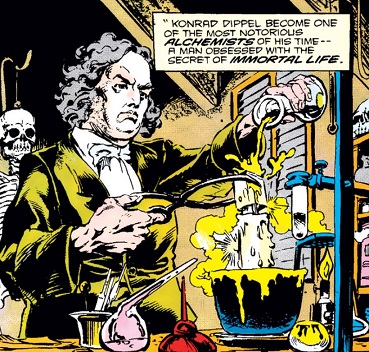
A curious question about derivative images. If somebody uploads a copyrighted image to a chatbot and asks it to Create a similar picture without any copyright violation, is that (even assuming that the AI understands the request and international copyright law) a COM:DERIV work?
Commons:Deletion requests/File:Konrad Dippel as inspiration for Mary Shelley's Frankenstein.jpg is a DR where somebody has asked DALL-E to redraw a specific Marvel comics panel "without any copyright violation". Belbury (talk) 12:22, 10 July 2025 (UTC)

- The AI engines have no idea what that means and therefore will ignore the instruction and confidently say they followed it. The Squirrel Conspiracy (talk) 14:18, 10 July 2025 (UTC)
- You should voice your point of view on the matter at the deletion request, not here. This discussion is only to inform about the deletion request, not to duplicate it. Cambalachero (talk) 16:31, 10 July 2025 (UTC)
- No, I raised it here because it might merit a wider discussion.
- I've seen one or two other "copy this source image but make it different" AI image prompts passing through Commons recently in an attempt to avoid copyright or provenance issues. I can see how someone would be tempted to do it, if they knew that Commons wouldn't host the original image. Belbury (talk) 17:20, 10 July 2025 (UTC)
- I've also recently seen quite a few instances of users throwing images into ChatGPT to "retouch" them. Sometimes it's harmless (e.g. user page selfies), but there's often a significant loss of fidelity, e.g. the July 10 version of File:La Complutense, aseguradora de incendios (RPS 13-02-2022) azulejo.png (which I requested that the uploader revert). Omphalographer (talk) 22:02, 12 July 2025 (UTC)
- There are more at Category:ChatGPT retouched pictures. Currently they're all historical photos that have been upscaled and/or colorised. Belbury (talk) 11:01, 13 July 2025 (UTC)
- I've also recently seen quite a few instances of users throwing images into ChatGPT to "retouch" them. Sometimes it's harmless (e.g. user page selfies), but there's often a significant loss of fidelity, e.g. the July 10 version of File:La Complutense, aseguradora de incendios (RPS 13-02-2022) azulejo.png (which I requested that the uploader revert). Omphalographer (talk) 22:02, 12 July 2025 (UTC)
- You should voice your point of view on the matter at the deletion request, not here. This discussion is only to inform about the deletion request, not to duplicate it. Cambalachero (talk) 16:31, 10 July 2025 (UTC)
- It really depends on how the AI treats the word "similar". In this case, where the source image was fairly detailed and specific in nature, it appears to have taken that to mean "an image in the same style, with the same visual composition, and with similar text"; the result is clearly a derivative work in the copyright sense, regardless of the prompt's request to avoid "any copyright violation". If the input image had been something of a more generic nature - like, for instance, a landscape photo, or an image of a commonplace object - it's possible that the same prompt could have generated an image which was not a copyright violation by benefit of not copying any creative elements from the original work. But that is clearly not the case here. Omphalographer (talk) 16:31, 10 July 2025 (UTC)
_azulejo.png)
- I think there are always two possible results in such cases, and both probably mean that the image should be deleted: A) It's still a recognizable derivative work strongly resembling the original - then we have a copyright issue. B) It doesn't look like the original, it's different enough to be considered not a derivative work - then it's probably out of scope as it has no meaningful use. Gestumblindi (talk) 18:37, 11 July 2025 (UTC)
- B would depend on what is it you want to illustrate with it. Let's say that someone manages to write an article about the "Oh, crap!" trope (difficult but not impossible, there are some articles on tropes). The face of Simba can not be used there, not even as fair use; there are limited cases where fair use is allowed on Wikipedia and that one wouldn't be one of those. But a modified version, that keeps the "oh, crap!" face gesture but looks nothing like Simba? Now we would be talking. Cambalachero (talk) 19:12, 14 July 2025 (UTC)
- Relatedly, I was poking around the uploads of the user who uploaded the files in that deletion request. He has a number of uploads where it appears he prompted DALL-E to draw and color a photo. In some cases the original is available: compare File:Torhaus Wellingsbüttel 2006.JPG to File:Torhaus Wellingsbüttel DALL E Totale.jpg, or File:Mangerstraße_34_36_Potsdam.jpg to File:Villa Kellermann DALL-E.jpg. On File:Gutshaus Fernsicht DALL E.jpg the original isn't given but the prompt is given as "Zeichne und coloriere das Bild" (Draw and color this image). If a human made a sketch of a building I think that would be fine (under present US copyright law), but this feels closer to using Photoshop to put a filter on an image that makes it look like it was hand-drawn and colored. I think most people would agree that the result of that Photoshop filter would be a derivative work. I'm not a lawyer, but I don't know why telling DALL-E to do it makes it different. Apocheir (talk) 21:49, 12 July 2025 (UTC)
- Fully agreed. And I'm not sure what the educational value of the "hand drawn" versions is; they're at best imprecise reproductions of the original photos. Omphalographer (talk) 22:05, 12 July 2025 (UTC)
- Coincidentally and ominously I've since encountered an upload created using the AI website https://nomorecopyright.com, which invites its users to
Make Free Non-Copyright Images For Personal & Commercial Use
with its front page being an upload box inviting users toUpload an image to transform it into a unique, distinct version designed solely for inspiration and creative exploration.
Belbury (talk) 10:27, 14 July 2025 (UTC)- I predict that we're eventually going to need to put in an upload filter on that URL then. The Squirrel Conspiracy (talk) 00:18, 15 July 2025 (UTC)
- Why? Disclaimers have no weight, that page has the same rules as any other AI provider. Cambalachero (talk) 00:32, 15 July 2025 (UTC)
- Because, given the way it's described to users, there's an unusually high risk that it will be used to produce derivative works of copyrighted images, and that those images won't be attributed properly if uploaded to Commons. Omphalographer (talk) 01:52, 15 July 2025 (UTC)
- Why? Disclaimers have no weight, that page has the same rules as any other AI provider. Cambalachero (talk) 00:32, 15 July 2025 (UTC)
- I predict that we're eventually going to need to put in an upload filter on that URL then. The Squirrel Conspiracy (talk) 00:18, 15 July 2025 (UTC)


Requiring source photos for AI-retouched historical images
As noted above, I've noticed an increasing number of users using tools like ChatGPT to retouch or "enhance" historical images they upload. There are a couple of big problems with this:
- With no source image, it is difficult to tell to what degree the retouched image accurately represents the original, or to tell if the image was generated de novo by an image model. It's not uncommon for image models to introduce inaccuracies when retouching images, especially if the image was of relatively low quality; having an original image to compare against is the only reliable way to tell if this has occurred. And, of course, an entirely AI-generated image masquerading as a historical photo or painting is of no (possibly even negative) educational value; these images are frequently used in hoaxes, and it's critical that we be able to identify and remove them quickly.
- If the only copy we have of an image is one which has already been modified by AI, there is no practical way for us to revise the retouched image using other tools - we're stuck with whatever edits the image model has made, which may have lost or distorted information from the original photo.
- If the source image for a retouched photo is not available on Commons, we cannot verify that it is freely licensed and appropriately attributed. The fact that an image "looks old" isn't incontrovertible proof that it's in the public domain, especially when image models can be used to artificially "age" an image.
As such, I'd like to propose that we require that, if substantially AI-retouched images are uploaded to Commons, that the original image must be available on Commons as well and linked from the retouched image's description page (e.g. using {{Retouched|orig=...}}). Acceptable exceptions are new photographs taken and retouched by the uploader, and images which were already AI-retouched as obtained from an external source.
How do we feel about this?
Omphalographer (talk) 19:28, 23 July 2025 (UTC)
- I'm not sure the original needs to be on Commons, but it certainly ought to be available somewhere online. Why specifically on Commons? - Jmabel ! talk 04:47, 24 July 2025 (UTC)
- To ensure that we have the source image available in the future. Other web sites may go offline or reorganize in ways that make the photo hard to find. If the photo is important enough to be worth retouching, it's worth an extra minute or two to save a copy of the original as well. Omphalographer (talk) 05:14, 24 July 2025 (UTC)
- Support as written. The Squirrel Conspiracy (talk) 05:16, 24 July 2025 (UTC)
- Oppose Needless bureaucracy. Point 3 is wrong: a source does not need to be online, as long as we have all the relevant details. I have uploaded myself several PD photos scanned from books. If someone wants to upload an AI modified version of a PD image, then we need the details on both the AI and the original image, or it gets tagged as lacking source information. That's current policy and does not require new changes. Cambalachero (talk) 13:49, 24 July 2025 (UTC)
- Oppose as written. This seems abusable. For example: works of the US government are generally {{PD-USGov}}. If a US government employee publishes an image retouched by AI, it would (generally, under current US copyright law) still be PD as {{PD-USGov}} and {{PD-algorithm}}. This proposal would oblige us to delete that image unless the original was also published, which they're under no obligation to do. Apocheir (talk) 22:42, 24 July 2025 (UTC)
- That would be an "image which was already AI-retouched as obtained from an external source", and that's precisely why I included that exception. Omphalographer (talk) 22:44, 24 July 2025 (UTC)
- I'm not sure how to read the "must" suggestion here. Are you suggesting that such images be deleted when they lack this, or that we template and maintenance-category them to say that we feel very strongly that the original source image should also be uploaded to Commons? Of the two thousand images in Category:Upscaling, a lot are upscaled YouTube stills and archive.org newspaper clippings where the source is clearly credited and linked, but the original image was never uploaded. Belbury (talk) 08:08, 25 July 2025 (UTC)
Possible AI-generated images
I have a problem with some pictures not marked as AI-generated, but most liquely are. Is it possible to categorise files as "should be checked against being an AI-generated file"??? The following question was in the Bistro, but archived without any reaction. MHM (talk) 08:43, 8 October 2025 (UTC)
- Yes, I had created Category:Unconfirmed likely AI-generated images to check for that (I don't know if anybody is checking them but I sometimes ping the uploader to clarify). Prototyperspective (talk) 13:51, 8 October 2025 (UTC)
- Thanks. The images concerned have been added to this category. MHM (talk) 21:03, 8 October 2025 (UTC)
- It looks like you've added every upload by User:Beeckfrau to this category. Can you be more specific about your concern here? Are you worried that these images may have been 100% created by an AI and may not be real statues at all, or are you saying that they could be upscaled versions of original photographs?
- Checking one at random, Beeckfrau's File:Ella Fitzgerald Montreux.jpg doesn't look any different to other photos we already have of the same statue at File:Statue of Ella Fitzgerald in Montreux.jpg and File:Ella Fitzgerald - Danièle Lauffer - Montreux 01.jpg.
- There's nothing about any of this user's uploads that stands out as AI-generated, to me. Belbury (talk) 11:17, 9 October 2025 (UTC)
- @MHM55: Could you clarify your reason for categorising these files? Belbury (talk) 11:15, 23 October 2025 (UTC)
- Thanks. The images concerned have been added to this category. MHM (talk) 21:03, 8 October 2025 (UTC)


Doute concernant la photographie d'un buste, et d'une série de photos
Cette image File:Anna Eynard-Lullin Bern.jpg représente un buste posé sur un rayon avec quelques livres. Plusieurs aspects me font douter de son authenticité.

- contributeur "Beeckfrau" ayant téléchargé une série d'images en trois minutes, venant de lieux très divers Special:ListFiles/Beeckfrau ;
- buste connu (reconnaissable aux veines du marbre) à la Bibliothèque de Genève (BGE Anna Eynard-Lullin (1793-1868), mécène et philanthrope genevoise), mais dans un autre environnement, posé sur un socle qui manque ici ;
- "Bern" dans le titre du fichier ;
- la taille du buste selon la BGE est : env. 50 x 43 x 30 cm, les livres semblent trop
petitsgrands en comparaison ; - toute l'image est floue malgré une bonne définition, aucun titre de livre ne peut être déchiffré.
- cette image aurait été prise le 5 mai 2025 à 12:42:13, à Berne, une autre image de la même série (Anna de Noailles) aurait été prise le 5 mai 2025 à 12:40:14, à Vevey, cela ne paraît pas réaliste...

D'autres avis seraient utiles. MHM (talk) 14:44, 23 September 2025 (UTC)
- This was probably archived without reaction because of language barrier. It may get more answers if you ask it in English. Cambalachero (talk) 13:37, 8 October 2025 (UTC)
- @Cambalachero:
- The user said it did not get any reaction in the Bistro, which is specifically a French-language page.
- I would much rather people post in good French than bad English.
- Jmabel ! talk 13:43, 8 October 2025 (UTC)
- Clearly AI: the "books" have titles in what looks like an alphabet, but isn't. I don't even need to look into the other issues raised.
- @MHM55: You could have started a DR. I will do so. - Jmabel ! talk 13:46, 8 October 2025 (UTC)
- @Cambalachero:
It seems better to raise my point in English. Although Jmabel thinks already it is "Clearly AI". The series of "photographs" uploaded by Special:ListFiles/Beeckfrau raises some questions : all are loaded in only three minutes, although described as made at very different places and times ; the file File:Anna Eynard-Lullin Bern.jpg shows a bust with "Bern" in the title but this bust belongs to the Geneva (University) Library "BGE" (look at ]) ; this image is supposedly taken on 5.5.2025 at 12:42:13 in Berne and another image from the same series (Anna de Noailles) is supposedly taken on the same day at 12:40:14 in Vevey, which is impossible ; the size of the books beside the bust are not realistic in comparison of the size of the bust (50x43x30cm). Looking at the all series, they all look nice – but strange. Therefore I asked for more experimented wikipedians to have a look at them. Thanks.
- @Jmabel, Cambalachero, Prototyperspective, and Belbury: File:Anna Eynard-Lullin Bern.jpg has already been deleted. Thanks! I nevertheless think that the all series Special:ListFiles/Beeckfrau should be checked. MHM (talk) 12:52, 24 October 2025 (UTC)
- @MHM55: Mismatched camera dates don't prove that an image can only have been created by AI. The uploader's device could have had the wrong date or timezone set, the date could have been changed later, or the photos could have been taken by different people.
- Looking over a few of the linked files, File:Anna Seiler Brunnen.jpg looks like it may have been upscaled in-camera by somebody zooming in, but the majority seem like completely normal photos of real statues. Can you highlight the ones that you actually believe to be AI upscaled or AI generated, rather than asking us to check all thirty for you? Belbury (talk) 13:10, 24 October 2025 (UTC)
- Or even more simple, he's not uploading the images the same day he takes them, but just decided one day to upload several that he had in the phone. And I still don't see how does any of this justifies deletion, AI images are allowed. Cambalachero (talk) 13:36, 24 October 2025 (UTC)
- You're right, there's actually no date or timestamp for when File:Anna de Noailles Vevey.jpg was taken, now that I look at it. The 12:40 timestamp is listed as a "File change date and time" in the EXIF; the time that the user saved the file in Photoshop.
- I intend to request undeletion of File:Anna Eynard-Lullin Bern.jpg, I'm waiting to see if this discussion gives any more context for MHM's concerns about AI, and whether they mean AI generation or upscaling. Belbury (talk) 14:07, 24 October 2025 (UTC)
- Undeletion requested at Commons:Undeletion requests/Current requests#File:Anna_Eynard-Lullin Bern.jpg. Belbury (talk) 15:01, 2 November 2025 (UTC)
- @Cambalachero: but only if they are acknowledged as AI, and with several other provisos. - Jmabel ! talk
- Or even more simple, he's not uploading the images the same day he takes them, but just decided one day to upload several that he had in the phone. And I still don't see how does any of this justifies deletion, AI images are allowed. Cambalachero (talk) 13:36, 24 October 2025 (UTC)


With no further response from User:MHM55 about why the remainder of Beeckfrau's images might be AI generated, beyond the timestamps being implausible and some books in a now deleted image looking a different size to what MHM55 was expecting, I've removed the "Unconfirmed likely AI-generated images to check" category from their uploads. None of them look AI generated to me. --Belbury (talk) 14:14, 2 November 2025 (UTC)
Food for thought
Assuming AI Generated works are not copyrighted: Let's assume media is using an AI generated image in their reporting and the image and media reporting based on the image has a significant impact on the public discussion: Would the image be eligible for commons and wikipedia? The relevancy would be it's effect in shaping of the public discussion, the copyright status Public Domain (no human authorship) and the use the documentation of the media discord. I think of Monkey selfie copyright dispute meets AI basically. MichaelFrey (talk) 10:30, 12 October 2025 (UTC)
- Yes, {{PD-algorithm}} applies to any work that we know
does not contain sufficient human authorship to support a copyright claim
and which wasn't created in a country with limited protection of AI-generated works. Such images are in the public domain, and have been copied to Commons from their original source in the past (eg. File:Pope Trump AI by Donald Trump.png). - Whether we can conclude that an image contains no human authorship because the media discourse alone is describing it as AI-generated is less clear. There's a thread from a year ago at Commons talk:AI-generated media#AI content taken from the web that didn't reach a conclusion. Belbury (talk) 11:11, 12 October 2025 (UTC)
- Why wouldnt it? Trade (talk) 17:05, 2 November 2025 (UTC)

Brands, Trademarks, etc.
I would like to see a warning on the page regarding Trademarks. Commons:Non-copyright restrictions is linked on the page, but only in the context of Terms of use of AI providers.
Trademarks create a two pronged legal argument for rights holders regarding "intentionally derivative works". MichaelFrey (talk) 10:45, 12 October 2025 (UTC)
- They're not really relevant to us. Trademarks are mostly about market confusion, and we aren't selling anything. You can create an intentionally derivative trademark; it's done all the time in movies, and even in commerce, there's e.g. a ridiculous number of Dr. X (Dr. Doctor, Dr. Thunder, Dr. Dynamite) drinks that are clearly variants of Dr. Pepper but different enough to be legally distinct.--Prosfilaes (talk) 21:49, 12 October 2025 (UTC)
- Also: we can add {{Trademarked}} to any image where trademark issues exist, but there is literally nothing different about AI-generated images and all other images in this respect. We aren't going to reiterate everything about everything here. - Jmabel ! talk 03:33, 8 December 2025 (UTC)
Works that use AI for image retouching after shooting
The topic doesn't seem very clear here. It should also be written more clearly about how each item should be uploaded to the website. Sheminghui.WU (talk) 07:13, 25 December 2025 (UTC)
- This page is about AI-generated media, hence the title. Feel free to create a new page about AI-use for image retouching. Nosferattus (talk) 21:56, 16 February 2026 (UTC)
- There is no clear dividing line between the two. See the below discussion #Reason to be suspicious of AI-driven "image enhancement" for an example, as well as the recent situation of Pedu0303's uploads. Omphalographer (talk) 23:20, 16 February 2026 (UTC)
Reason to be suspicious of AI-driven "image enhancement"
Take a close look at the history of this file: File:Théodoric_1er_et_Litorius.jpg

I'm fairly certain that the uploader used an AI tool like ChatGPT to "straighten" this image, and it inadvertently introduced some changes to the content of the image in the process. (I've asked on their talk page for clarification.) Omphalographer (talk) 01:55, 7 January 2026 (UTC)
- Whatever is going on there, even if it wasn't AI-assisted, "correction de la perspective" certainly does not cover significant contrast reduction, mostly by lightening the shadows. That said, I've made comparable changes without AI assistance, e.g. File:Theodor Aman - Glume de peste Olt.jpg, File:Van Gogh - The Carrot Harvester.jpg. - Jmabel ! talk 07:01, 7 January 2026 (UTC)
- I'm not; it might be a entirely different source. What makes you think it's not just a combination of standard Photoshop/GIMP tools?--Prosfilaes (talk) 00:14, 8 January 2026 (UTC)
- The uploader confirmed that they used ChatGPT: User talk:Frédéric Neupont#File:Théodoric 1er et Litorius.jpg. Beyond that, though, the new image differed in some details, e.g. the straightened roofline at the upper left, some changes to the banners at the upper right, and some extended content on the sides. No standard image editor would have made these alterations. Omphalographer (talk) 00:45, 8 January 2026 (UTC)


Template for likely AI audio
I found some audio files that were almost certainly generated in part or in whole by an "AI" model, but only marked as uploaded by a human user.
Is there a template to mark that? Something like {{Author missing}}, but specific to "AI". Amir E. Aharoni (talk) 19:07, 12 January 2026 (UTC)
Discussion on amending this guideline at VP
The discussion is Commons:Village pump/Proposals#Narrow scope for AI on Commons Dronebogus (talk) 01:51, 1 March 2026 (UTC)
Drafting an upscaling guideline
Commons:Upscaling. Not exclusively about AI upscaling, but I suspect pagewatchers here may be interested. I hope to propose it as a guideline sometime next week and would appreciate more feedback. — Rhododendrites talk | 15:37, 14 March 2026 (UTC)
- This is badly needed with regard to AI. I think most of the concerns have been addressed well by you; scope is the biggest reason for cutting back on this. I want to take a moment to complain about how bad this is for Commons and Wikipedia... I am constantly seeing editors overwrite photographs of real people with upscaling that causes freakish changes like clothes merging with skin, and these are being put into Wikipedia without any discussion, replacing real photographs, and no mention is ever made by the people doing this that these are not real photos. On the Commons end, we should be making sure we have accurate file descriptions so people are not just pulling from here and putting it into all sorts of uses without knowing this is even going on. I do want to make a suggestion; I haven't seen discussion of how to apply Commons:Source to these (please point me to it if it exists; I'm talking not about source for the original photo as discussed above, but specifically also including the model as a source). Source is supposed to be requried for copyright reasons, but we have decided upscaling with AI is not a copyright conern. Yet, it would be greatly helpful, I think, to require disclosure of which model/tool these are being run through, because it is the source of highly speculative new information. All of this should be required of uploaders: disclosure of AI use, respecting scope limits, refraining from overwriting, and providing information about the source of all parts of the file. Right now, I have never once seen disclosure in any of these uploads. They don't do it at all. TEMPO156 (talk) 07:23, 22 April 2026 (UTC)
Four images
I don't really see the purpose for having four images of an AI generated version of the Commons logo. I think just one would depict the main subject (AI-generated media) perfectly fine, especially since the other ones are not educational. The fountain one seems like the best candidate since it's also used on Korean Wikipedia. EnvironmentalDoor (talk) 14:20, 17 April 2026 (UTC)

 Comment, the other three images are currently nominated for deletion, so perhaps you can discuss this over there. Thanks. Tvpuppy (talk) 21:03, 17 April 2026 (UTC)
Are maps generated by AI-assisted computer code "AI-generated"?
I've upload a set of locator maps of municipalities and provinces in Bolivia, which were generated using the computer programming language R. I'm coming here for clarification on what is required for posting these images, given that the coding, but not the image generation itself, was done while using a coding assistant (in this case Posit AI, a data science-focused harness operating atop Claude).

The maps were generated by code in R, specifically, a ggplot of structured geographic data. The code is here. Specifically, it is a plot of a [dataset with a free license https://data.humdata.org/dataset/cod-ab-bol]. It was generated on my machine using software I use daily in my research work, including to generate maps with Bolivia's municipality boundaries. Only this time, my script, which produced 451 images sequentially (well, 339 and 112 with similar scripts), each one coloring in a different municipality or province. The code in turn was written and re-written with an AI coding assistant, [Posit AI https://posit.co/blog/introducing-ai-in-rstudio], and is also the product of my extensive review and alterations, both manual and via automated rewrites of the code.
At issue in the conversation I'm having on my talk page are:
- Whether "AI-generated" as meant in this policy applies to such images? / Whether this policy requires categorizing these maps as "AI-generated" and restricting their use on Commons and elsewhere?
- Whether my current sourcing statement is correct: "Own work. Plot drawn using R, ggplot2, sf as laid out in this R script, which was written using Posit AI assistant as well as manual edits. Internal borders drawn from Bolivia (Plurinational State of) administrative level 0-3 boundaries (COD-AB) dataset version 02, which is CC-BY-IGO UN Office of Coordination of Humanitarian Assistance. https://data.humdata.org/dataset/cod-ab-bol"
- Whether I instead need to list Posit AI as a co-author of the work.
Re 1: I agree with what I understand to be the purpose and direction of the policy listed here, but I also understand "AI-generated" to refer to images actually brought into existence through image generators. For reference, here's what happens when requesting Google's Gemini Pro to create the map shown above: an image is generated, which has the general look and feel of a locator map, but which inaccurately combines two Bolivian departments together, and label the combined area with eight of the ten provinces in Chuquisaca, puts the departmental capital Sucre in the wrong place, and draws Yaparáez with the wrong shape and borders. That image falls afoul of all of the concerns raised on this policy page: unreliability, inaccuracy, uncertain provenance, uncertain copyright status, etc.
The map shared above does not. In essence, only small variations in appearance are possible given the choice to use the locator map color scheme, the underlying base data, highlight the polygon for the province. Given the validity of the borders involved, the code straightforwardly plots the boundaries and produces reliable maps for each of the territories chosen. The free nature of the geometry involved comes from direct use of a free dataset.
Re 2: On attribution, I'm very clear that I can legally claim authorship, in a far more substantive way than prior contributions to Commons, where I just toggled the color of nation states on a blank map or flood-filled one municipality in an existing raster graphic. In this case, I put substantial effort into choosing those variables, and that dataset, reviewing the results of a plot, dealing with visual clutter generated by the initial code, and both manually and through the AI coding assistant cleaning up the borders of neighboring countries. Both the overall structure of the code, which I requested and revised in some detail, and many of the specifics reflect my choices and judgment.


On the other hand, I'm personally not a big fan of the idea that data visualizations should be copyrighted at all. Because I'm not much of a fan of owning this kind of knowledge, I'm requesting a CC0 license here.
Re 3: I just don't think it's accurate to say that this is a PD-algorithm case. An LLM did not create these images on its own. Nor, do I think that co-authorship is exactly honest here. But let me explain…

To illustrate what's going on here, I turned off coding assistance and charged my self with regenerating the code for a single new map. I produced this new map of an Ethiopian third-level administrative unit, which is likewise scriptable into images for the country's 670 such units (though the 100 urban ones are just as well covered with points on a background map). The unassisted code is here. I could functionalize the code, and upload all those files. (It's on the batch processing that AI code assistance was most timesaving, though not essential.) The real policy question is, in my view, do the two SVG's on this page deserve different treatment?
I think the answer is pretty clearly no. And I think having clear, reproducible ways of making repetitive images, and uploadin them in mass to Commons is precisely aligned with our goals. Either purely hand-typed or AI-assisted code can contribute to that work, and competent review of both the code and their output is required to meet those goals. We should have more cases where images are generated in their hundreds to meet systematic needs like this one, and greater access for fellow contributors to review the choices made so that images can be corrected and improved at scale. All of these goals work better when media is backed by code and when that code is inspectable. None of this requires AI assistance to execute it, but I can say it's easier to do so in this case with such an assistant.--Carwil (talk) 03:54, 18 May 2026 (UTC)
- FWIW, I think Carwil is correct here. I don't have time to elaborate this now, but wanted to weigh in. I'm interested in whether this is even controversial and, if anyone thinks otherwise, what is their rationale? - Jmabel ! talk 02:11, 19 May 2026 (UTC)
- I don't see an issue here either. So long as the map images are being generated based on real GIS data, and they're being reviewed by a human before upload, I'm not terribly concerned about the precise process that's being used to assemble them. Omphalographer (talk) 03:50, 19 May 2026 (UTC)
- I agree. I think our policy is mostly meant for generative AI, not any kind of AI-assisted creation of content - maybe this could be stated more clearly? Gestumblindi (talk) 22:35, 21 May 2026 (UTC)
- I think the description of what is acceptable along these lines would be something like, "It is acceptable to use agentic AI to drive algorithmic (non-AI) tools that do the actual creation of a chart, map, etc. The uploader is still responsible for the accuracy of the image they upload, exactly as if no AI had been involved. For more or less the same reasons that the AI can't own a copyright, it also is not the party to be blamed for errors and inaccuracies." - Jmabel ! talk 13:46, 25 May 2026 (UTC)
- I agree. I think our policy is mostly meant for generative AI, not any kind of AI-assisted creation of content - maybe this could be stated more clearly? Gestumblindi (talk) 22:35, 21 May 2026 (UTC)
- I don't see an issue here either. So long as the map images are being generated based on real GIS data, and they're being reviewed by a human before upload, I'm not terribly concerned about the precise process that's being used to assemble them. Omphalographer (talk) 03:50, 19 May 2026 (UTC)
LLM use on talk pages
Just giving notice here about this VP thread: Commons:Village pump § LLM use in discussion. The guideline COM:AI covers only media, not talk pages and other discussions; should we have a guideline for LLM use on talk pages, like enwiki does? Apocheir (talk) 22:49, 18 May 2026 (UTC)