Jesus (name)

Jesus
Pronunciation/ˈzəs/
GenderMale
Origin
Word/nameHebrew, Ancient Greek
Meaning"YHWH is salvation"
Region of originWest Asia, Greece
Other names
Related namesIsa, Isho, Joshua, Yeshua, Yashu, Jezús, Jézus.

Jesus (/ˈzəs/) is a masculine given name derived from Iēsous (ἸησοῦςCategory:Articles containing Ancient Greek (to 1453)-language text; IesusCategory:Articles containing Latin-language text in Classical Latin), the Ancient Greek form of the Hebrew name Yeshua (ישועCategory:Articles containing Hebrew-language text).[1][2] As its roots lie in the name Isho in Aramaic and Yeshua in Hebrew, it is etymologically related to another biblical name, Joshua.[3]

The vocative form Jesu, from Latin Iesu, was commonly used in religious texts and prayers during the Middle Ages, particularly in England, but gradually declined in usage as the English language evolved.

Jesus is usually not used as a given name in the English-speaking world, while its counterparts have had longstanding popularity among people with other language backgrounds, such as the Spanish Jesús.

Etymology

Linguistic analysis

There have been various proposals as to the literal etymological meaning of the name Yəhôšuaʿ (Joshua, Hebrew: יְהוֹשֻׁעַCategory:Articles containing Hebrew-language text), including Yahweh/Yehowah saves, (is) salvation, (is) a saving-cry, (is) a cry-for-saving, (is) a cry-for-help, (is) my help.[4][5][6][7] A recent study proposes that the name should be understood as "Yahweh is lordly".[8]

Yehoshua–Yeshua–Iēsous–IESVS–Iesu–Jesus

This early biblical Hebrew name יְהוֹשֻׁעַ (Yehoshuaʿ) underwent a shortening into later biblical יֵשׁוּעַ (Yeshuaʿ), as found in the Hebrew text of verses Ezra 2:2, 2:6, 2:36, 2:40, 3:2, 3:8, 3:9, 3:10, 3:18, 4:3, 8:33; Nehemiah 3:19, 7:7, 7:11, 7:39, 7:43, 8:7, 8:17, 9:4, 9:5, 11:26, 12:1, 12:7, 12:8, 12:10, 12:24, 12:26; 1 Chronicles 24:11; and 2 Chronicles 31:15 – as well as in Biblical Aramaic at verse Ezra 5:2. These Bible verses refer to ten individuals (in Nehemiah 8:17, the name refers to Joshua son of Nun).

This historical change may have been due to a phonological shift whereby guttural phonemes weakened, including [h]Category:Pages with plain IPA.[9] Usually, the traditional theophoric element יהו (Yahu) was shortened at the beginning of a name to יו (Yo-), and at the end to יה (-yah). In the contraction of Yehoshuaʿ to Yeshuaʿ, the vowel is instead fronted (perhaps due to the influence of the y in the triliteral root y-š-ʿ). Yeshua was in common use by Jews during the Second Temple period and many Jewish religious figures bear the name, including Joshua in the Hebrew Bible and Jesus in the New Testament.[2][1]

During the post-biblical period the further shortened form Yeshu was adopted by Hebrew speaking Jews to refer to the Christian Jesus, however Yehoshua continued to be used for the other figures called Jesus.[10] However, both the Western and Eastern Syriac Christian traditions use the Aramaic name ܝܫܘܥCategory:Articles containing Imperial Aramaic (700-300 BCE)-language text (in Hebrew script: ישוע) Yeshuʿ and Yishoʿ, respectively, including the ʿayin.[11]

The name Jesus is derived from the Hebrew name Yeshua, which is based on the Semitic root y-š-ʕ (Hebrew: ישעCategory:Articles containing Hebrew-language text), meaning "to deliver; to rescue."[12][13][14] Likely originating in proto-Semitic (yṯ'), it appears in several Semitic personal names outside of Hebrew, as in the Aramaic name Hadad Yith'i, meaning "Hadad is my salvation". Its oldest recorded use is in an Amorite personal name from 2048 B.C.[15]

By the time the New Testament was written, the Septuagint had already transliterated ישוע (Yeshuaʿ) into Koine Greek as closely as possible in the 3rd-century BCE, the result being ἸησοῦςCategory:Articles containing Ancient Greek (to 1453)-language text (Iēsous). Since Greek had no equivalent to the Semitic letter ש shin [ʃ]Category:Pages with plain IPA, it was replaced with a σCategory:Articles containing Ancient Greek (to 1453)-language text sigma [s]Category:Pages with plain IPA, and a masculine singular ending [-s]Category:Pages with plain IPA was added in the nominative case, in order to allow the name to be inflected for case (nominative, accusative, etc.) in the grammar of the Greek language. The diphthongal [a]Category:Pages with plain IPA vowel of Masoretic Yehoshuaʿ or Yeshuaʿ would not have been present in Hebrew/Aramaic pronunciation during this period, and some scholars believe some dialects dropped the pharyngeal sound of the final letter ע ʿayin [ʕ]Category:Pages with plain IPA, which in any case had no counterpart in ancient Greek. The Greek writings of Philo of Alexandria[16] and Josephus frequently mention this name. In the Panarion of Epiphanius of Salamis, the name Iēsous comes from Hebrew/Aramaic and means "healer or physician, and saviour," and that the earliest Christians were named Jessaeans based on this name before they were called Christians. This etymology of "physician" may derive from the sect of the θεραπευταί (Therapeutae), of which Ephanius was familiar.[17] More likely, however, the name Jesus (Greek Ἰησοῦς) was simply becoming associated by Greek speakers with the homophonic Greek word ἴασις “healing” and its cognates ἰᾶσθαι “to heal” and ἰατρός “healer.”[18]

From Greek, ἸησοῦςCategory:Articles containing Ancient Greek (to 1453)-language text (Iēsous) moved into Latin at least by the time of the Vetus Latina. The morphological jump this time was not as large as previous changes between language families. ἸησοῦςCategory:Articles containing Ancient Greek (to 1453)-language text (Iēsous) was transliterated to Latin IESVS, where it stood for many centuries. The Latin name has an irregular declension, with a genitive, dative, ablative, and vocative of JesuCategory:Articles containing Latin-language text, accusative of JesumCategory:Articles containing Latin-language text, and nominative of JesusCategory:Articles containing Latin-language text. Minuscule (lower case) letters were developed around 800 and some time later the U was invented to distinguish the vowel sound from the consonantal sound and the J to distinguish the consonant from I. Similarly, Greek minuscules were invented about the same time, prior to that the name was written in capital letters (ΙΗϹΟΥϹCategory:Articles containing Ancient Greek (to 1453)-language text) or abbreviated as (ΙΗϹCategory:Articles containing Ancient Greek (to 1453)-language text) with a line over the top, see also Christogram.

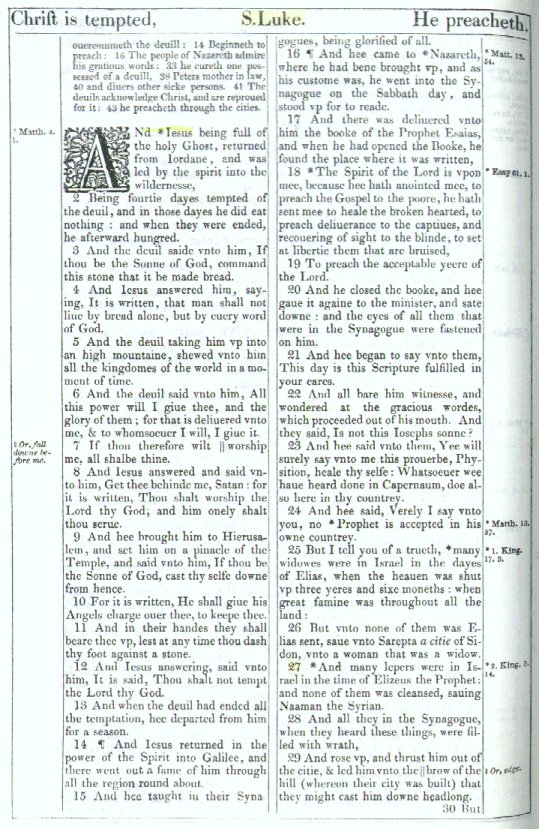
Modern English Jesus derives from Early Middle English IesuCategory:Articles containing Middle English (1100-1500)-language text (attested from the 12th century). The name participated in the Great Vowel Shift in late Middle English (15th century). The letter J was first distinguished from 'I' by the Frenchman Pierre Ramus in the 16th century, but did not become common in Modern English until the 17th century, so that early 17th century works such as the first edition of the King James Version of the Bible (1611) continued to print the name with an I.[19]

From the Latin, the English language takes the forms Jesus (from the nominative form), and Jesu (from the vocative and oblique forms). Jesus is the predominantly used form, while Jesu lingers in some more archaic religious texts.

Declension

In both Latin and Greek, the name is declined irregularly:Category:All articles with unsourced statementsCategory:Articles with unsourced statements from December 2021[citation needed]

Latin Greek
nominative JēsūsCategory:Articles containing Latin-language textIēsūsCategory:Articles containing Latin-language text (IēsusCategory:Articles containing Latin-language text) ἸησοῦςCategory:Articles containing Ancient Greek (to 1453)-language text
accusative JēsūmCategory:Articles containing Latin-language textIēsūmCategory:Articles containing Latin-language text (IēsumCategory:Articles containing Latin-language text) ἸησοῦνCategory:Articles containing Ancient Greek (to 1453)-language text
dative JēsūCategory:Articles containing Latin-language textIēsūCategory:Articles containing Latin-language text ἸησοῦCategory:Articles containing Ancient Greek (to 1453)-language text
genitive
vocative
ablative

Biblical references

A 3rd century papyrus of the Gospel of Luke

The name Jesus (Yeshua) appears to have been in use in the Land of Israel at the time of the birth of Jesus.[2][20] Moreover, Philo's reference in Mutatione Nominum item 121 to Joshua (ἸησοῦςCategory:Articles containing Ancient Greek (to 1453)-language text) meaning salvation (σωτηρίαCategory:Articles containing Ancient Greek (to 1453)-language text) of the Lord indicates that the etymology of Joshua was known outside Israel.[21] Other figures named Jesus include Jesus Barabbas, Jesus ben Ananias and Jesus ben Sirach.

In the New Testament, in Luke 1:31 an angel tells Mary to name her child Jesus, and in Matthew 1:21 an angel tells Joseph to name the child Jesus during Joseph's first dream. Matthew 1:21 indicates the salvific implications of the name Jesus when the angel instructs Joseph: "you shall call his name Jesus, for he will save his people from their sins".[22][23] It is the only place in the New Testament where "saves his people" appears with "sins".[24] Matthew 1:21 provides the beginnings of the Christology of the name Jesus. At once it achieves the two goals of affirming Jesus as the savior and emphasizing that the name was not selected at random, but based on a heavenly command.[25]

Other usage

Medieval English and Jesus

Category:Articles needing additional references from July 2020Category:All articles needing additional references

John Wycliffe (1380s) used the spelling Ihesus and also used Ihesu ('J' was then a swash glyph variant of 'I', not considered to be a separate letter until the 1629 Cambridge 1st Revision King James Bible where "Jesus" first appeared) in oblique cases, and also in the accusative, and sometimes, apparently without motivation, even for the nominative. Tyndale in the 16th century has the occasional Iesu in oblique cases and in the vocative; The 1611 King James Version uses Iesus throughout, regardless of syntax. Jesu came to be used in English, especially in hymns.

Jesu (/ˈz/ JEE-zoo; from Latin Iesu) is sometimes used as the vocative of Jesus in English. The oblique form, Iesu, came to be used in Middle English.

Other languages

Isho or Iisho, the Syriac Aramaic name of Jesus

In East Scandinavian, German and several other languages, the name Jesus is used. Some other language usage is as follows:

LanguageName/variant
AfrikaansJesusCategory:Articles containing Afrikaans-language text[26]
AlbanianJezuCategory:Articles containing Albanian-language text[26]
ArabicعيسىCategory:Articles containing Arabic-language text (ʿIsà) (Islamic or classical Arabic) / يسوعCategory:Articles containing Arabic-language text (Yasūʿ) (Christian or latter Arabic)[27]
Amharicእየሱስ።Category:Articles containing Amharic-language text (Iyesus)[26]
AragoneseChesúsCategory:Articles containing Aragonese-language text
Aramaic/SyriacܝܫܘܥCategory:Articles containing Imperial Aramaic (700-300 BCE)-language text (Isho)
ArbereshIsuthiCategory:Articles containing Arbëreshë Albanian-language text
ArmenianՀիսուս (reformed orthography) Յիսուս (classical orthography)Category:Articles containing Armenian-language text (Hisus)
Australian KriolJisasCategory:Articles containing Australian Kriol-language text
AzerbaijaniİsaCategory:Articles containing Azerbaijani-language text[26]
BelarusianІсусCategory:Articles containing Belarusian-language text (Isus) (Orthodox)[26] / ЕзусCategory:Articles containing Belarusian-language text (Yezus) (Catholic)
BengaliযীশুCategory:Articles containing Bengali-language text (Yɪśu) (Christian)[26] 'ঈসাCategory:Articles containing Bengali-language text (Īsā) (general)
BosnianIsusCategory:Articles containing Bosnian-language text[26]
BretonJezuzCategory:Articles containing Breton-language text
BulgarianИсусCategory:Articles containing Bulgarian-language text (Isus)[26]
BurmeseယေရှုCategory:Articles containing Burmese-language text (Yay-shu)
CatalanJesúsCategory:Articles containing Catalan-language text[26]
Chinesesimplified Chinese: Category:Articles containing simplified Chinese-language text耶稣; traditional Chinese: Category:Articles containing traditional Chinese-language text耶穌; pinyin: Yēsū[26]
CopticⲒⲏⲥⲟⲩⲥCategory:Articles containing Coptic-language text (Isos)
CornishYesuCategory:Articles containing Cornish-language text
CorsicanGhjesùCategory:Articles containing Corsican-language text
CroatianIsusCategory:Articles containing Croatian-language text[26]
CzechJežíšCategory:Articles containing Czech-language text[26]
DutchJezusCategory:Articles containing Dutch-language text[26]
EstonianJeesusCategory:Articles containing Estonian-language text[26]
FilipinoJesúsCategory:Articles containing Persian-language text, HesúsCategory:Articles containing Tagalog-language text or HesukristoCategory:Articles containing Tagalog-language text[26]
FijianJisuCategory:Articles containing Fijian-language text
FinnishJeesusCategory:Articles containing Finnish-language text[26]
FrenchJésusCategory:Articles containing French-language text[26]
GalicianXesúsCategory:Articles containing Galician-language text[26]
GaroJisuCategory:Articles containing Garo-language text
GeorgianიესოCategory:Articles containing Georgian-language text (Ieso)[26]
GermanJesusCategory:Articles containing German-language text[26]
EweYesuCategory:Articles containing Ewe-language text
GreekἸησοῦςCategory:Articles containing Ancient Greek (to 1453)-language text (Iēsoûs) / ΙησούςCategory:Articles containing Greek-language text[26] (Iisoús) (pronounced [i.iˈsus]Category:Pages with Greek IPA in modern Greek)
Haitian CreoleJeziCategory:Articles containing Haitian Creole-language text[26]
Lai-HakhaJesuhCategory:Articles containing Hakha Chin-language text
HausaYesuCategory:Articles containing Hausa-language text[26]
HawaiianIesūCategory:Articles containing Hawaiian-language text[26]
HebrewיֵשׁוּעַCategory:Articles containing Hebrew-language text[26] (Yeshua)
HindiयसूCategory:Articles containing Hindi-language text (Yesu) or यीशुCategory:Articles containing Hindi-language text (Yeshu) or ईसाCategory:Articles containing Hindi-language text (Īsā)
Hmong DawYexusCategory:Articles containing Hmong-language text[26]
HungarianJézusCategory:Articles containing Hungarian-language text[26]
IcelandicJesúsCategory:Articles containing Icelandic-language text[26]
IgboJesusCategory:Articles containing Igbo-language text[26]
IndonesianYesusCategory:Articles containing Indonesian-language text (Christian)[26] / IsaCategory:Articles containing Indonesian-language text (Islamic)
IrishÍosaCategory:Articles containing Irish-language text[26]
ItalianGesùCategory:Articles containing Italian-language text[26]
JapaneseイエスCategory:Articles containing Japanese-language text (Iesu)[26]
JinghpawYesuCategory:Articles containing Kachin-language text
KannadaಯೇಸುCategory:Articles containing Kannada-language text (Yesu)
KazakhИсаCategory:Articles containing Kazakh-language text (Isa)[26]
KhasiJisuCategory:Articles containing Khasi-language text
Khmerយេស៑ូCategory:Articles containing Khmer-language text (Yesu), យេស៑ូវCategory:Articles containing Khmer-language text (Yesuw)[26]
KikuyuJesoCategory:Articles containing Gikuyu-language text
KisiiYesoCategory:Articles containing Gusii-language text
Korean예수Category:Articles containing Korean-language text (Yesu)[26]
KurdishÎsaCategory:Articles containing Kurdish-language text[26]
LatvianJēzusCategory:Articles containing Latvian-language text[26]
LigurianGesûCategory:Articles containing Ligurian-language text
LimburgishZjezusCategory:Articles containing Limburgish-language text
LithuanianJėzusCategory:Articles containing Lithuanian-language text[26]
LombardGesüCategory:Articles containing Lombard-language text
LugandaYezuCategory:Articles containing Luganda-language text[26]
MāoriIhuCategory:Articles containing Māori-language text[26][28]
MarathiयेशूCategory:Articles containing Marathi-language text (Yeshu Christa)[26]
MalagasyJesoCategory:Articles containing Malagasy-language text, JesoaCategory:Articles containing Malagasy-language text, JesosyCategory:Articles containing Malagasy-language text
MalayIsaCategory:Articles containing Malagasy-language text
MalayalamഈശോCategory:Articles containing Malayalam-language text (Īśo) Syriac-origin; യേശുCategory:Articles containing Malayalam-language text (Yēśu) from Portuguese;
MirandeseJasusCategory:Articles containing Mirandese-language text
MizoIsuaCategory:Articles containing Lushai-language text (In Mizo names, an a has to be added behind every male name), IsuCategory:Articles containing Lushai-language text
MalteseĠesùCategory:Articles containing Maltese-language text
MongolianЕсүсCategory:Articles containing Mongolian-language text[26] (Esüs)
NeapolitanGiesùCategory:Articles containing Neapolitan-language text
NormanJésusCategory:Articles containing Norman-language text
OccitanJèsusCategory:Articles containing Occitan (post 1500)-language text
Persian FarsiعیسیCategory:Articles containing Persian-language text (Īsā)[29]
PiedmonteseGesùCategory:Articles containing Piedmontese-language text
PolishJezusCategory:Articles containing Polish-language text[26]
PortugueseJesusCategory:Articles containing Portuguese-language text[26]
RomanianIisusCategory:Articles containing Romanian-language text (Orthodox), IsusCategory:Articles containing Romanian-language text (Catholic)[26]
RussianИисусCategory:Articles containing Russian-language text (Iisus)[26]
SardinianGesùsCategory:Articles containing Sardinian-language text
SerbianIsusCategory:Articles containing Serbian-language text / ИсусCategory:Articles containing Serbian-language text
SicilianGesùCategory:Articles containing Sicilian-language text
Sinhalaයේසුස් වහන්සේCategory:Articles containing Sinhala-language text[26] (Yēsus Vahansē)
Scottish GaelicÌosaCategory:Articles containing Scottish Gaelic-language text
ShonaJesuCategory:Articles containing Shona-language text
SlovakJežišCategory:Articles containing Slovak-language text[26]
SlovenianJezusCategory:Articles containing Slovene-language text[26]
SomaliCiiseCategory:Articles containing Somali-language text[26]
SpanishJesúsCategory:Articles containing Spanish-language text[26]
SwahiliYesuCategory:Articles containing Swahili (macrolanguage)-language text[26]
TajikИсоCategory:Articles containing Tajik-language text (Iso)[26]
Tamilஇயேசு கிறிஸ்துCategory:Articles containing Tamil-language text (Yesu Christu)
TeluguయేసుCategory:Articles containing Telugu-language text (Yesu)[26]
ThaiพระเยซูCategory:Articles containing Thai-language text[26] (Phráʔ Yēsū)
TurkishİsaCategory:Articles containing Turkish-language text[26]
TurkmenIsaCategory:Articles containing Turkmen-language text
UkrainianІсусCategory:Articles containing Ukrainian-language text (Isus)[26]
UrduیسوعCategory:Articles containing Urdu-language text (Yesu) or یشوعCategory:Articles containing Urdu-language text (Yeshu) or عیسیٰCategory:Articles containing Urdu-language text (Isa)[26]
UzbekIsoCategory:Articles containing Uzbek-language text[26]
VenetianJesuCategory:Articles containing Venetian-language text
VietnameseChúa GiêsuCategory:Articles containing Vietnamese-language text[26]
WelshIesuCategory:Articles containing Welsh-language text[26]
XhosauYesuCategory:Articles containing Xhosa-language text[26]
YorubaJesuCategory:Articles containing Yoruba-language text[26]
Zomi (Tedim-Chin)ZeisuhCategory:Articles containing Tedim Chin-language text (most common), JesuhCategory:Articles containing Tedim Chin-language text
ZuluuJesuCategory:Articles containing Zulu-language text[26]

See also

References

  1. 1 2 Liddell and Scott. A Greek–English Lexicon, p. 824.
  2. 1 2 3 Catholic encyclopedia: Origin of the name Jesus Christ
  3. Robinson 2005; Stegemann 2006.
  4. "שׁוע", Ernest Klein, A Comprehensive Etymological Dictionary of the Hebrew Language (New York: Macmillan Publishing Company 1987)
  5. Talshir, M. H. Segal, A Grammar of Mishnaic Hebrew (Tel Aviv: 1936), p. 146.
  6. Philo, De Mutatione Nominum, §21
  7. Brown, Driver, Briggs, Gesenius, Hebrew and English Lexicon With an Appendix Containing the Biblical Aramaic (Hendrickson, 1985), ISBN 0-913573-20-5. Cf. Blue Letter Bible, H3442
  8. Ayali-Darshan 2018.
  9. Elisha Qimron, The Hebrew of the Dead Sea Scrolls (Harvard Semitic Studies: Scholars Press 1986), p.25
  10. Robert E. Van Voorst Jesus outside the New Testament 2000 ISBN 978-0-8028-4368-5 p124 "This is likely an inference from the Talmud and other Jewish usage, where Jesus is called Yeshu, and other Jews with the same name are called by the fuller name Yeshua and Yehoshua, "Joshua""
  11. Jennings
  12. Brown Driver Briggs Brown-Driver-Briggs Hebrew and English Lexicon; Hendrickson Publishers 1996
  13. "Strong's Hebrew: 3467. יָשַׁע (yasha) -- to deliver". biblehub.com. Retrieved 2018-10-29.
  14. Brown Driver Briggs Hebrew and English Lexicon; Hendrickson Publishers 1996 ISBN 1-56563-206-0.
  15. "A.2 The Proto-Semitic root *yṯ' now seems to lie behind Hebrew [ישָׁע], being attested in proper names in NWSem and most of the ESA languages. The Ug evidence attests to the second consonant being ṯ (Sawyer 1975:78). This new evidence counters some earlier interpretations based on Arb (see B.1). The main arguments outlined by Sawyer (1975) are the evidence of proper names in NW Sem (A.3, A.4, B.3), the collocation of yṯ' terms with deities’ names (as with ישׁע; see A.1, 3, 5, 7-10; also Syntagmatics A.1), chronological evidence (see A.5, 7-10) and phonological equivalence (B.1). Earlier KB (412, along with wasiʿa), Huffmon (1965: 215) and Stolz (1971: 786, citing Sawyer 1965:475-76, 485) had supported this view; and at the conference where Sawyer originally presented his paper T.L. Fenton and H.W.F. Saggs had indicated their strong agreement with it (Sawyer 1975: 83-84). Significantly this view was adopted in the latest Hebrew lexicon to incorporate philological data (Ges18: 510 [1995])." (Aitken & Davies, 2016)
  16. Philo Judaeus, "De ebrietate" in Philonis Alexandrini opera quae supersunt ed. P. Wendland, Berlin: Reimer, 1897 (repr. De Gruyter, 1962) vol. 2:170-214, Section 96, Line 2.
  17. Williams, Frank; translator. "Introduction". The Panarion of Epiphanius of Salamis, Book I (Sects 1-46). 1987. (E.J. Brill, Leiden) ISBN 90-04-07926-2.
  18. Reece, Steve (2025). Wordplay on Proper Names in Luke-Acts. Amsterdam: E.J. Brill. pp. 154–163. ISBN 978-90-04-74641-1.
  19. Image of the first edition of the King James Version of the Bible, Gospel of Luke. From http://nazirene.peopleofhonoronly.com/. Retrieved March 28, 2006.
  20. Matthew by Douglas Hare 2009 ISBN 0-664-23433-X page 11
  21. Matthew 1-7 by William David Davies, Dale C. Allison 2004 ISBN 0-567-08355-1 page 209
  22. Bible explorer's guide by John Phillips 2002 ISBN 0-8254-3483-1 page 147
  23. All the Doctrines of the Bible by Herbert Lockyer 1988 ISBN 0-310-28051-6 page 159
  24. The Westminster theological wordbook of the Bible 2003 by Donald E. Gowan ISBN 0-664-22394-X page 453
  25. Who do you say that I am?: essays on Christology by Jack Dean Kingsbury, Mark Allan Powell, David R. Bauer 1999 ISBN 0-664-25752-6 page 17
  26. 1 2 3 4 5 6 7 8 9 10 11 12 13 14 15 16 17 18 19 20 21 22 23 24 25 26 27 28 29 30 31 32 33 34 35 36 37 38 39 40 41 42 43 44 45 46 47 48 49 50 51 52 53 54 55 56 57 58 59 60 61 62 63 64 65 "Jesus in Every Language". GodWords. 2019-02-05. Retrieved 2023-05-17.
  27. Anawati, G. C. (May 1998), "ʿIsā", in Lewis, B.; Pellat, C.; Vandonzel, E. (eds.), Encyclopaedia of Islam, vol. 4, Brill Academic Pub, p. 81, ISBN 978-90-04-05745-6
  28. "Ihu". Te Aka Online Māori Dictionary. Retrieved 10 June 2021.
  29. How to say Jesus in Farsi

Bibliography

Category:Given names of Greek language origin Category:Names of Jesus#* Category:Spanish masculine given names Category:Masculine given names Category:Given names of Hebrew language origin
Category:All articles needing additional references Category:All articles with unsourced statements Category:Articles containing Afrikaans-language text Category:Articles containing Albanian-language text Category:Articles containing Amharic-language text Category:Articles containing Ancient Greek (to 1453)-language text Category:Articles containing Arabic-language text Category:Articles containing Aragonese-language text Category:Articles containing Arbëreshë Albanian-language text Category:Articles containing Armenian-language text Category:Articles containing Australian Kriol-language text Category:Articles containing Azerbaijani-language text Category:Articles containing Belarusian-language text Category:Articles containing Bengali-language text Category:Articles containing Bosnian-language text Category:Articles containing Breton-language text Category:Articles containing Bulgarian-language text Category:Articles containing Burmese-language text Category:Articles containing Catalan-language text Category:Articles containing Coptic-language text Category:Articles containing Cornish-language text Category:Articles containing Corsican-language text Category:Articles containing Croatian-language text Category:Articles containing Czech-language text Category:Articles containing Dutch-language text Category:Articles containing Estonian-language text Category:Articles containing Ewe-language text Category:Articles containing Fijian-language text Category:Articles containing Finnish-language text Category:Articles containing French-language text Category:Articles containing Galician-language text Category:Articles containing Garo-language text Category:Articles containing Georgian-language text Category:Articles containing German-language text Category:Articles containing Gikuyu-language text Category:Articles containing Greek-language text Category:Articles containing Gusii-language text Category:Articles containing Haitian Creole-language text Category:Articles containing Hakha Chin-language text Category:Articles containing Hausa-language text Category:Articles containing Hawaiian-language text Category:Articles containing Hebrew-language text Category:Articles containing Hindi-language text Category:Articles containing Hmong-language text Category:Articles containing Hungarian-language text Category:Articles containing Icelandic-language text Category:Articles containing Igbo-language text Category:Articles containing Imperial Aramaic (700-300 BCE)-language text Category:Articles containing Indonesian-language text Category:Articles containing Irish-language text Category:Articles containing Italian-language text Category:Articles containing Japanese-language text Category:Articles containing Kachin-language text Category:Articles containing Kannada-language text Category:Articles containing Kazakh-language text Category:Articles containing Khasi-language text Category:Articles containing Khmer-language text Category:Articles containing Korean-language text Category:Articles containing Kurdish-language text Category:Articles containing Latin-language text Category:Articles containing Latvian-language text Category:Articles containing Ligurian-language text Category:Articles containing Limburgish-language text Category:Articles containing Lithuanian-language text Category:Articles containing Lombard-language text Category:Articles containing Luganda-language text Category:Articles containing Lushai-language text Category:Articles containing Malagasy-language text Category:Articles containing Malayalam-language text Category:Articles containing Maltese-language text Category:Articles containing Marathi-language text Category:Articles containing Middle English (1100-1500)-language text Category:Articles containing Mirandese-language text Category:Articles containing Mongolian-language text Category:Articles containing Māori-language text Category:Articles containing Neapolitan-language text Category:Articles containing Norman-language text Category:Articles containing Occitan (post 1500)-language text Category:Articles containing Persian-language text Category:Articles containing Piedmontese-language text Category:Articles containing Polish-language text Category:Articles containing Portuguese-language text Category:Articles containing Romanian-language text Category:Articles containing Russian-language text Category:Articles containing Sardinian-language text Category:Articles containing Scottish Gaelic-language text Category:Articles containing Serbian-language text Category:Articles containing Shona-language text Category:Articles containing Sicilian-language text Category:Articles containing Sinhala-language text Category:Articles containing Slovak-language text Category:Articles containing Slovene-language text Category:Articles containing Somali-language text Category:Articles containing Spanish-language text Category:Articles containing Swahili (macrolanguage)-language text Category:Articles containing Tagalog-language text Category:Articles containing Tajik-language text Category:Articles containing Tamil-language text Category:Articles containing Tedim Chin-language text Category:Articles containing Telugu-language text Category:Articles containing Thai-language text Category:Articles containing Turkish-language text Category:Articles containing Turkmen-language text Category:Articles containing Ukrainian-language text Category:Articles containing Urdu-language text Category:Articles containing Uzbek-language text Category:Articles containing Venetian-language text Category:Articles containing Vietnamese-language text Category:Articles containing Welsh-language text Category:Articles containing Xhosa-language text Category:Articles containing Yoruba-language text Category:Articles containing Zulu-language text Category:Articles containing simplified Chinese-language text Category:Articles containing traditional Chinese-language text Category:Articles needing additional references from July 2020 Category:Articles with short description Category:Articles with unsourced statements from December 2021 Category:Given names of Greek language origin Category:Given names of Hebrew language origin Category:Masculine given names Category:Names of Jesus Category:Pages with Greek IPA Category:Pages with plain IPA Category:Short description is different from Wikidata Category:Spanish masculine given names