fend
English
Pronunciation
Etymology 1
Category:English terms derived from Proto-Indo-European#FENDCategory:English terms derived from the Proto-Indo-European root *gʷʰen-#FENDFrom Middle EnglishCategory:English terms inherited from Middle English#FENDCategory:English terms derived from Middle English#FEND fenden (“defend, fight, prevent”), shortening of defenden (“defend”), from Old FrenchCategory:English terms derived from Old French#FEND deffendre (Modern French défendre), from LatinCategory:English terms derived from Latin#FEND dēfendō (“to ward off”), from dē- + *fendō (“hit, thrust”), from Proto-ItalicCategory:English terms derived from Proto-Italic#FEND *fendō, from Proto-Indo-EuropeanCategory:English terms derived from Proto-Indo-European#FEND *gʷʰen- (“strike, kill”).
Verb
fend (third-person singular simple present fends, present participle fending, simple past and past participle fended)Category:English lemmas#FENDCategory:English verbs#FENDCategory:English entries with incorrect language header#FENDCategory:Pages with entries#FENDCategory:Pages with 6 entries#FEND
- (intransitiveCategory:English intransitive verbs#FEND) To take care of oneself; to take responsibility for one's own well-being.
- 1990, Messrs Howley and Murphy, quoted in U.S. House Subcommittee on Labor Standards, Oversight hearing on the Federal Service Contract Act, U.S. Government Printing Office, page 40,
- Mr. Howley. They are telling him how much they will increase the reimbursement for the total labor cost. The contractor is left to fend as he can.
- Chairman Murphy. Obviously, he can’t fend for any more than the money he has coming in.
- 2003, Scott Turow, Reversible Errors, page 376:
- The planet was full of creatures in need, who could not really fend, and the law was at its best when it ensured that they were treated with dignity.Category:English terms with quotations#FEND
- 1990, Messrs Howley and Murphy, quoted in U.S. House Subcommittee on Labor Standards, Oversight hearing on the Federal Service Contract Act, U.S. Government Printing Office, page 40,
- (rareCategory:English terms with rare senses#FEND, except as "fend for oneself") To defend, to take care of (typically construed with for); to block or push away (typically construed with off).
- 1697, Virgil, “The Third Book of the Georgics”, in John Dryden, transl., The Works of Virgil: Containing His Pastorals, Georgics, and Æneis. […], London: […] Jacob Tonson, […], →OCLC:
- With fern beneath to fend the bitter cold.Category:English terms with quotations#FEND
- 1999, Luo Guanzhong, translated by Moss Roberts, Three Kingdoms: A Historical Novel, page 39:
- He fends, he blocks, too skillful to be downed.Category:English terms with quotations#FEND
- 2002, Jude Deveraux, A Knight in Shining Armor, page 187:
- “ […] My age is lot like yours. Lone women do not fare well. If I were not there to fend for you, you—”Category:English terms with quotations#FEND
Derived terms
Translations
Noun
fend (uncountable)Category:English lemmas#FENDCategory:English nouns#FENDCategory:English uncountable nouns#FENDCategory:English uncountable nouns#FENDCategory:English entries with incorrect language header#FENDCategory:Pages with entries#FENDCategory:Pages with 6 entries#FEND
- (obsoleteCategory:English terms with obsolete senses#FEND) Self-support; taking care of one's own well-being.
Etymology 2
Category:English terms derived from Proto-Indo-European#FENDCategory:English terms derived from the Proto-Indo-European root *peh₁-#FENDFrom Middle EnglishCategory:English terms inherited from Middle English#FENDCategory:English terms derived from Middle English#FEND fēndCategory:Middle English links with redundant target parameters#FEND, feond, from Old EnglishCategory:English terms inherited from Old English#FENDCategory:English terms derived from Old English#FEND fēond (“adversary, foe, enemy, fiend, devil, Satan”), from Proto-GermanicCategory:English terms inherited from Proto-Germanic#FENDCategory:English terms derived from Proto-Germanic#FEND *fijandz, present participle of *fijaną, from Proto-Indo-EuropeanCategory:English terms derived from Proto-Indo-European#FEND *peh₁- (“to hate”). More at fiend.
Noun
fend (plural fends)Category:English lemmas#FENDCategory:English nouns#FENDCategory:English countable nouns#FENDCategory:English entries with incorrect language header#FENDCategory:Pages with entries#FENDCategory:Pages with 6 entries#FEND
Anagrams
Albanian
Alternative forms
Etymology
Whether fendë (“fart”) derives from fend or viceversa is unclear. Ultimate origin may be:
- Possibly from a tentative root Proto-Indo-EuropeanCategory:Albanian terms inherited from Proto-Indo-European#FENDCategory:Albanian terms derived from Proto-Indo-European#FEND *sp(ʰ)end- (“to twitch, wriggle”) whence also Ancient Greek σφαδᾴζω (sphadāízō, “to shiver, tremble”), Sanskrit स्पन्द् (spand, “to quiver, shake”).[1]
- A connection with Venetan fiandrina (“fart”)[2] is not enough substantiated.
- Alternatively analysable as a back-formation from fënduk (“cowardly, timid”)Category:Albanian back-formations#FEND, which may be borrowed from Ottoman TurkishCategory:Albanian terms borrowed from Ottoman Turkish#FENDCategory:Albanian terms derived from Ottoman Turkish#FEND فندق (funduk, fındık, literally “hazelnut”), also attested dialectally meaning “arse; flirtatious woman”, compare Aromanian fãndãc, fãndec (“arse”).
Pronunciation
Verb
fend (aorist fenda, participle fendur)Category:Albanian lemmas#FENDCategory:Albanian verbs#FENDCategory:Albanian entries with incorrect language header#FENDCategory:Pages with entries#FENDCategory:Pages with 6 entries#FEND (intransitiveCategory:Albanian intransitive verbs#FEND)
- to fart, break wind silently
- Synonym: pjerdh
- (dialectalCategory:Albanian dialectal terms#FEND) to gossip
Conjugation
Show compound tenses:
| participle | fendur | ||||||
|---|---|---|---|---|---|---|---|
| gerund | duke fendur | ||||||
| infinitive | për të fendur | ||||||
| singular | plural | ||||||
| 1st pers. | 2nd pers. | 3rd pers. | 1st pers. | 2nd pers. | 3rd pers. | ||
| indicative | present | fend | fend | fend | fendim | fendni | fendin |
| imperfect | fendja | fendje | fendte | fendnim | fendnit | fendnin | |
| aorist | fenda | fende | fendi | fendëm | fendët | fendën | |
| perfect | kam fendur | ke fendur | ka fendur | kemi fendur | keni fendur | kanë fendur | |
| past perfect | kisha fendur | kishe fendur | kishte fendur | kishim fendur | kishit fendur | kishin fendur | |
| aorist II | pata fendur | pate fendur | pati fendur | patëm fendur | patët fendur | patën fendur | |
| future1 | do të fend | do të fendësh | do të fendë | do të fendim | do të fendni | do të fendin | |
| future perfect2 | do të kem fendur | do të kesh fendur | do të ketë fendur | do të kemi fendur | do të keni fendur | do të kenë fendur | |
| subjunctive | present | të fend | të fendësh | të fendë | të fendim | të fendni | të fendin |
| imperfect | të fendja | të fendje | të fendte | të fendnim | të fendnit | të fendnin | |
| perfect | të kem fendur | të kesh fendur | të ketë fendur | të kemi fendur | të keni fendur | të kenë fendur | |
| past perfect | të kisha fendur | të kishe fendur | të kishte fendur | të kishim fendur | të kishit fendur | të kishin fendur | |
| conditional1, 2 | imperfect | do të fendja | do të fendje | do të fendte | do të fendnim | do të fendnit | do të fendnin |
| past perfect | do të kisha fendur | do të kishe fendur | do të kishte fendur | do të kishim fendur | do të kishit fendur | do të kishin fendur | |
| optative | present | fendsha | fendsh | fendtë | fendshim | fendshi | fendshin |
| perfect | paça fendur | paç fendur | pastë fendur | paçim fendur | paçit fendur | paçin fendur | |
| admirative | present | fendkam | fendke | fendka | fendkemi | fendkeni | fendkan |
| imperfect | fendkësha | fendkëshe | fendkësh | fendkëshim | fendkëshit | fendkëshin | |
| perfect | paskam fendur | paske fendur | paska fendur | paskemi fendur | paskeni fendur | paskan fendur | |
| past perfect | paskësha fendur | paskëshe fendur | paskësh fendur | paskëshim fendur | paskëshit fendur | paskëshin fendur | |
| imperative | present | — | fend | — | — | fendni | — |
| 1) indicative future identical with conditional present 2) indicative future perfect identical with conditional perfect | |||||||
Derived terms
References
- ↑ Orel, Vladimir (1998), “fend”, in Albanian Etymological Dictionary, Leiden; Boston; Köln: Brill, →ISBN, page 95
- ↑ Meyer, G. (1891), “fend”, in Etymologisches Wörterbuch der albanesischen Sprache [Etymological Dictionary of the Albanian Language] (in German), Strasbourg: Karl J. Trübner, , page 101
- FGJSSH: Fjalor i gjuhës së sotme shqipe [Dictionary of the modern Albanian language], 1980, page 460b
- Mann, S. E. (1948), “fënd”, in An Historical Albanian–English Dictionary, London: Longmans, Green & Co., page 105a
- Kristoforidhi, Kostandin (1904), “φένd”, in Λεξικὸν τῆς Ἀλβανικῆς γλώσσης [Lexikón tís Alvanikís glóssis] (in Greek), Athens, page 459
- Rossi, F. (1875), “fènd”, in Vocabolario della lingua epirotica–italiana (in Italian), page 366b
French
Pronunciation
Verb
fendCategory:French non-lemma forms#FENDCategory:French verb forms#FENDCategory:French entries with incorrect language header#FENDCategory:Pages with entries#FENDCategory:Pages with 6 entries#FEND
Hungarian
Etymology
Pronunciation
- IPA(key): [ˈfɛnd]Category:Hungarian terms with IPA pronunciation#FEND
- Hyphenation: fend
Verb
fendCategory:Hungarian non-lemma forms#FENDCategory:Hungarian verb forms#FENDCategory:Hungarian entries with incorrect language header#FENDCategory:Pages with entries#FENDCategory:Pages with 6 entries#FEND
- second-person singular imperative present definite of fen
- Synonym: fenjed
Manx
Etymology
From EnglishCategory:Manx terms borrowed from English#FENDCategory:Manx terms derived from English#FEND fend.
Verb
fend (verbal noun fendeil, past participle fendit)Category:Manx lemmas#FENDCategory:Manx verbs#FENDCategory:Manx entries with incorrect language header#FENDCategory:Pages with entries#FENDCategory:Pages with 6 entries#FEND
Mutation
Middle English
Alternative forms
Etymology
From Old EnglishCategory:Middle English terms inherited from Old English#FENDCategory:Middle English terms derived from Old English#FEND fēond, from Proto-West GermanicCategory:Middle English terms inherited from Proto-West Germanic#FENDCategory:Middle English terms derived from Proto-West Germanic#FEND *fijand, from Proto-GermanicCategory:Middle English terms inherited from Proto-Germanic#FENDCategory:Middle English terms derived from Proto-Germanic#FEND *fijandz.
Pronunciation
- IPA(key): /feːnd/, /fɛnd/Category:Middle English terms with IPA pronunciation#FEND
- IPA(key): /vøːnd/ (West Midland or Southern)Category:Middle English terms with IPA pronunciation#FEND
Noun
fendCategory:Middle English lemmas#FENDCategory:Middle English nouns#FENDCategory:Middle English entries with incorrect language header#FENDCategory:Pages with entries#FENDCategory:Pages with 6 entries#FEND (plural fendes)
- An enemy, foe or fiend.
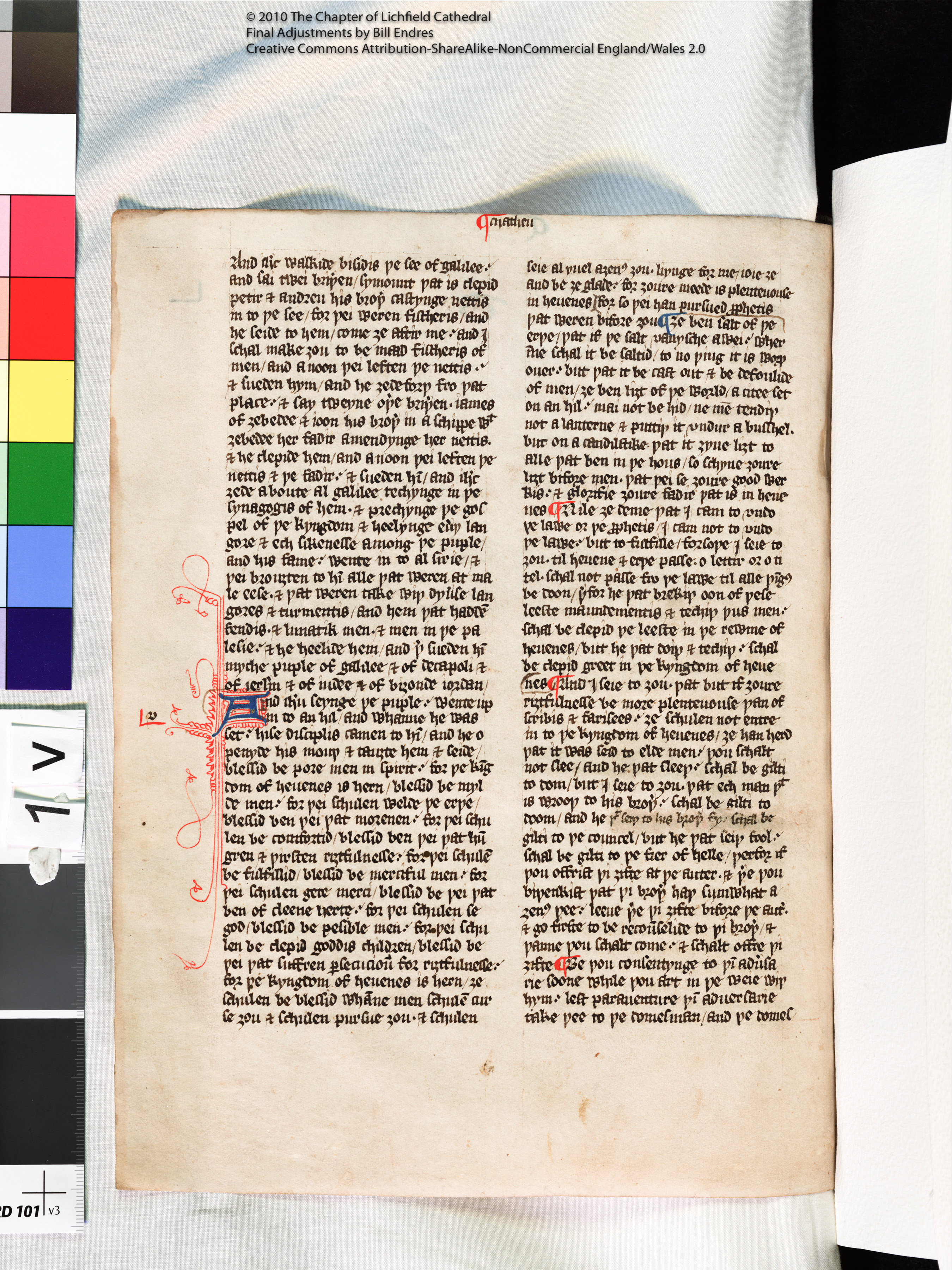
- c. 1395, John Wycliffe, John Purvey [et al.], transl., Bible (Wycliffite Bible (later version), MS Lich 10.), published c. 1410, Matheu 4:24, folio 1, verso, column 1, lines 18–23; republished as Wycliffe's translation of the New Testament, Lichfield: Bill Endres, 2010:
- and hıs fame .· wente in to al ſirie / ⁊ þei bꝛouȝten to hĩ alle þat weren at male eeſe · ⁊ þat weren take wiþ dyīiſe langoꝛes ⁊ turmentis / and hem þat haddẽ fendis · ⁊ lunatik men · ⁊ men in þe paleſie .· ⁊ he heelide hem /Category:Middle English terms with quotations#FEND
- Satan, the Devil.
- c. 1395, John Wycliffe, John Purvey [et al.], transl., Bible (Wycliffite Bible (later version), MS Lich 10.), published c. 1410, Matheu 4:1, folio 2, recto, column 2, lines 3–4; republished as Wycliffe's translation of the New Testament, Lichfield: Bill Endres, 2010:
- Thanne ıḣc was lad of a ſpirit in to deſert .· to be temptid of þe fend /Category:Middle English terms with quotations#FEND
- A demon, devil, or evil spirit, especially one that possesses people.
- A monster.

Descendants
References
- “fẹ̄nd, n.”, in MED Online, Ann Arbor, Mich.: University of Michigan, 2007, retrieved 10 January 2018.