lingua
English

Etymology
Unadapted borrowing from LatinCategory:English terms borrowed from Latin#LINGUACategory:English unadapted borrowings from Latin#LINGUACategory:English terms derived from Latin#LINGUA lingua (“the tongue”). Doublet of langue and tongueCategory:English doublets#LINGUA.
Pronunciation
Noun
lingua (plural linguae or linguas)Category:English lemmas#LINGUACategory:English nouns#LINGUACategory:English countable nouns#LINGUACategory:English nouns with irregular plurals#LINGUACategory:English entries with incorrect language header#LINGUACategory:Pages with entries#LINGUACategory:Pages with 13 entries#LINGUA
- (anatomyCategory:en:Anatomy#LINGUA) Synonym of tongue.
- 2009, Alex J. Packer, Wise Highs: How to Thrill, Chill, & Get Away from It All Without Alcohol Or Other Drugs, Read How You Want, →ISBN, page 24:
- Let your lingua loiter on its salty, hard surface. When you finally crack the nut, don’t swallow it right away.Category:English terms with quotations#LINGUA
- 2016, E.B. Mendel, If Frogs Could Fly, Sunbridge Books, →ISBN:
- “I believe it’s from the condition he’s acquired,” she answered while moving closer to examine the elongated lingua. “You can put it back in your mouth now.”Category:English terms with quotations#LINGUA
- (entomologyCategory:en:Entomology#LINGUA) A median process of the labium, at the underside of the mouth in insects, and serving as a tongue.
Derived terms
Related terms
References
- “lingua”, in Merriam-Webster.com Online Dictionary, Springfield, Mass.: Merriam-Webster, 1996–present.
Anagrams
Category:en:Organs#LINGUACorsican
Etymology
Category:Corsican terms derived from Proto-Italic#LINGUACategory:Corsican terms inherited from Proto-Italic#LINGUACategory:Corsican terms derived from Proto-Indo-European#LINGUACategory:Corsican terms inherited from Proto-Indo-European#LINGUAInherited from LatinCategory:Corsican terms inherited from Latin#LINGUACategory:Corsican terms derived from Latin#LINGUA lingua.
Noun
lingua f (plural lingue)Category:Corsican lemmas#LINGUACategory:Corsican nouns#LINGUACategory:Corsican entries with incorrect language header#LINGUACategory:Corsican feminine nouns#LINGUACategory:Pages with entries#LINGUACategory:Pages with 13 entries#LINGUA
Further reading
- “lingua” in INFCOR: Banca di dati di a lingua corsa
Galician
Alternative forms
Etymology
Category:Galician terms derived from Proto-Italic#LINGUACategory:Galician terms inherited from Proto-Italic#LINGUACategory:Galician terms derived from Proto-Indo-European#LINGUACategory:Galician terms inherited from Proto-Indo-European#LINGUAInherited from Old Galician-PortugueseCategory:Galician terms inherited from Old Galician-Portuguese#LINGUACategory:Galician terms derived from Old Galician-Portuguese#LINGUA lingua, from LatinCategory:Galician terms inherited from Latin#LINGUACategory:Galician terms derived from Latin#LINGUA lingua. Compare Portuguese língua.
Pronunciation
- IPA(key): (standard) /ˈliŋɡwa/ [ˈliŋ.ɡwɐ]Category:Galician terms with IPA pronunciation#LINGUA
- IPA(key): (gheada) /ˈliŋħwa/ [ˈliŋ.ħwɐ]Category:Galician terms with IPA pronunciation#LINGUA
- Hyphenation: lin‧gua
Noun
lingua f (plural linguas)Category:Galician lemmas#LINGUACategory:Galician nouns#LINGUACategory:Galician countable nouns#LINGUACategory:Galician entries with incorrect language header#LINGUACategory:Galician feminine nouns#LINGUACategory:Pages with entries#LINGUACategory:Pages with 13 entries#LINGUA
- Category:gl:Organs#LINGUAtongue
- botar a lingua a pacer (idiom)
- to ramble; to be indiscreet
- (literally, “to put the tongue to graze”)
- (countableCategory:Galician countable nouns#LINGUA) language (a body of words, and set of methods of combining them (called a grammar), understood by a community and used as a form of communication)
Further reading
- “lingua”, in Dicionario da Real Academia Galega (in Galician), A Coruña: Royal Galician Academy, 2012–2026
Guinea-Bissau Creole
Etymology
Derived from PortugueseCategory:Guinea-Bissau Creole terms derived from Portuguese#LINGUA língua. Cognate with Kabuverdianu lingua.
Noun
linguaCategory:Guinea-Bissau Creole lemmas#LINGUACategory:Guinea-Bissau Creole nouns#LINGUACategory:Guinea-Bissau Creole entries with incorrect language header#LINGUACategory:Pages with entries#LINGUACategory:Pages with 13 entries#LINGUA
- tongue
- (countableCategory:Guinea-Bissau Creole countable nouns#LINGUA) language (a body of words, and set of methods of combining them (called a grammar), understood by a community and used as a form of communication)
Interlingua
Pronunciation
Noun
lingua (plural linguas)Category:Interlingua lemmas#LINGUACategory:Interlingua nouns#LINGUACategory:Interlingua entries with incorrect language header#LINGUACategory:Pages with entries#LINGUACategory:Pages with 13 entries#LINGUA
- Category:ia:Organs#LINGUAtongue
- (countableCategory:Interlingua countable nouns#LINGUA) language (a body of words, and set of methods of combining them (called a grammar), understood by a community and used as a form of communication)
- Synonym: linguage
Related terms
Italian
Alternative forms
Etymology
Category:Italian terms derived from Proto-Italic#LINGUACategory:Italian terms inherited from Proto-Italic#LINGUACategory:Italian terms derived from Proto-Indo-European#LINGUACategory:Italian terms inherited from Proto-Indo-European#LINGUAInherited from LatinCategory:Italian terms inherited from Latin#LINGUACategory:Italian terms derived from Latin#LINGUA lingua.
Pronunciation
- IPA(key): /ˈlin.ɡwa/Category:Italian 2-syllable words#LINGUACategory:Italian terms with IPA pronunciation#LINGUA
Category:Italian terms with audio pronunciation#LINGUAAudio ("la lingua"): (file)
Category:Italian terms with audio pronunciation#LINGUAAudio: (file) - Rhymes: -inɡwaCategory:Rhymes:Italian/inɡwa#LINGUACategory:Rhymes:Italian/inɡwa/2 syllables#LINGUA
- Hyphenation: lìn‧gua
Noun
lingua f (plural lingue)Category:Italian lemmas#LINGUACategory:Italian nouns#LINGUACategory:Italian countable nouns#LINGUACategory:Italian entries with incorrect language header#LINGUACategory:Italian feminine nouns#LINGUACategory:Pages with entries#LINGUACategory:Pages with 13 entries#LINGUA
- Category:it:Organs#LINGUAtongue
- (countableCategory:Italian countable nouns#LINGUA) language (a body of words, and set of methods of combining them (called a grammar), understood by a community and used as a form of communication)
- strip, tongue (of land)
- (in the plural) foreign languages
- the square horn of an anvil
- (usually in the plural) a type of Italian flatbread
Related terms
Descendants
Further reading
Anagrams
Category:it:Language#LINGUACategory:it:Mouth#LINGUACategory:it:Organs#LINGUAKabuverdianu
Etymology
Derived from PortugueseCategory:Kabuverdianu terms derived from Portuguese#LINGUA língua.
Noun
linguaCategory:Kabuverdianu lemmas#LINGUACategory:Kabuverdianu nouns#LINGUACategory:Kabuverdianu entries with incorrect language header#LINGUACategory:Pages with entries#LINGUACategory:Pages with 13 entries#LINGUA
- tongue
- (countableCategory:Kabuverdianu countable nouns#LINGUA) language (a body of words, and set of methods of combining them (called a grammar), understood by a community and used as a form of communication)
Ladino
Alternative forms
Etymology
Category:Ladino terms derived from Proto-Italic#LINGUACategory:Ladino terms inherited from Proto-Italic#LINGUACategory:Ladino terms derived from Proto-Indo-European#LINGUACategory:Ladino terms inherited from Proto-Indo-European#LINGUAInherited from Old SpanishCategory:Ladino terms inherited from Old Spanish#LINGUACategory:Ladino terms derived from Old Spanish#LINGUA lengua (“tongue”), from LatinCategory:Ladino terms inherited from Latin#LINGUACategory:Ladino terms derived from Latin#LINGUA lingua. Cognate with Spanish lengua and more distantly Yiddish צונג (tsung).
Noun
lingua f (Hebrew spelling לינגוה, plural linguas)Category:Ladino lemmas#LINGUACategory:Ladino nouns#LINGUACategory:Ladino nouns in Latin script#LINGUACategory:Ladino entries with incorrect language header#LINGUACategory:Ladino feminine nouns#LINGUACategory:Pages with entries#LINGUACategory:Pages with 13 entries#LINGUA[1]
- Category:lad:Organs#LINGUAtongue
- Synonym: lashon
- (countableCategory:Ladino countable nouns#LINGUA) language (a body of words, and set of methods of combining them (called a grammar), understood by a community and used as a form of communication)
- Synonym: lashon
- 1999, Eliezer Papo, La megila de Saray, E. Papo, page 6:
- Aún kon esto se siente akí ke mos topamos delantre de la lingua eskrita del autor mizmo, ke en realidad es únika.Category:Ladino terms with quotations#LINGUA
- Even with this, here it feels that we find ourselves before a written language from the same author, who in reality is unique.
References
Latin
Alternative forms
Etymology
From older dingua (attested as a rare word in Gaius Marius Victorinus), from Proto-ItalicCategory:Latin terms inherited from Proto-Italic#LINGUACategory:Latin terms derived from Proto-Italic#LINGUA *denɣwā, from Proto-Indo-EuropeanCategory:Latin terms inherited from Proto-Indo-European#LINGUACategory:Latin terms derived from Proto-Indo-European#LINGUA *dn̥ǵʰwéh₂s. The change of d- to l- is variously explained by a borrowing from another ItalicCategory:Latin terms derived from Italic languages#LINGUA language with such a shift and/or by a folk-etymological association with the verb lingō (“to lick”); compare Old Armenian լեզու (lezu) and Lithuanian liežùvis for the latter process. Other cognates include German Zunge and English tongue.
Pronunciation
Noun
lingua f (genitive linguae)Category:Latin lemmas#LINGUACategory:Latin nouns#LINGUACategory:Latin first declension nouns#LINGUACategory:Latin feminine nouns in the first declension#LINGUACategory:Latin entries with incorrect language header#LINGUACategory:Latin feminine nouns#LINGUACategory:Pages with entries#LINGUACategory:Pages with 13 entries#LINGUA; first declension
- (literally) the tongue
- 27 BCE – 25 BCE, Titus Livius, Ab Urbe Condita 1.4:
- Ut lingua lambentem pueros magister [...] invenerit
- That the teacher founded [the wolf] licking the boys by the tongue
- Ut lingua lambentem pueros magister [...] invenerit
- 77 CE – 79 CE, Plinius Maior, Naturalis Historia 11.17.66:
- sub ea minor lingua nulli ova generantium.
- No oviparous species possesses the lesser tongue (the epiglottis) below the uvula.
- sub ea minor lingua nulli ova generantium.
- (transferred senseCategory:Latin terms with transferred senses#LINGUA)
- (metonymicCategory:Latin metonyms#LINGUA) a tongue, utterance, language, speech
- the tongue or language of a people
- 45 BCE, Cicero, De finibus bonorum et malorum 1.10:
- […], Latinam linguam non modo non inopem, ut vulgo putarent, sed locupletiorem etiam esse quam Graecam.
- […], the Latin language, so far from having a poor vocabulary, as is commonly supposed, is actually richer than the Greek.
- […], Latinam linguam non modo non inopem, ut vulgo putarent, sed locupletiorem etiam esse quam Graecam.
- (post-classical) a dialect, idiom or mode of speech
- c. 95 CE, Quintilianus, Institutio Oratoria 12.10.34:
- […] illis non verborum modo, sed linguarum etiam inter se differentium copia est.
- they [the Greeks] have not merely abundance of words, but they have also a number of different dialects.
- […] illis non verborum modo, sed linguarum etiam inter se differentium copia est.
- (poeticCategory:Latin poetic terms#LINGUA, of animals) a voice, note, song, bark, etc.
- an utterance, expression
- c. 95 CE, Quintilianus, Institutio Oratoria 1.1.35:
- protinus enim potest interpretationem linguae secretioris, quas Graeci γλώσσας vocant
- He can readily learn the explanations or glosses, as the Greeks call them, of the more obscure words by the way
- protinus enim potest interpretationem linguae secretioris, quas Graeci γλώσσας vocant
- to hold one's tongue (linguam comprimere, linguam tenēre)
- 8 CE, Ovidius, Fasti 2.601–602:
- saepe illī dīxerat Almō ‘nāta, tenē linguam,’ nec tamen illa tenet.
- Many a time had Almo said to her, ‘‘Daughter, hold your tongue,’’ and yet she did not hold it.
(The river deity Almo (god) and his daughter, whom Ovid identifies as the Naiad Lara, otherwise known in ancient mythology as Larunda or Dea Tacita. The name of the ever-talkative Lara – a repeated syllable, as in ‘‘la-la’’ – echoes the Greek λαλεῖν, to talk, chat, prattle, speak.)
- Many a time had Almo said to her, ‘‘Daughter, hold your tongue,’’ and yet she did not hold it.
- saepe illī dīxerat Almō ‘nāta, tenē linguam,’ nec tamen illa tenet.
- tongue-shaped things:
- Ranunculus linguaCategory:Entries using missing taxonomic name (species)#Ranunculus%20lingua (a flowering plant)
- Synonym: lingulāca
- 77 CE – 79 CE, Plinius Maior, Naturalis Historia 24.170:
- Lingua herba nascitur circa fontes.
- The plant called "tongue" grows around springs.
- Lingua herba nascitur circa fontes.
- the oxtongue, bugloss
- 77 CE – 79 CE, Plinius Maior, Naturalis Historia 17.112:
- […], lingua bubula—herbae id genus est—insuper optegi iubet eamque inligari opertam stramentis: […]
- […], but he says it must be covered with a layer of bugloss—a species of plant—as well, and that this should be tied on with a layer of straw; […]
- […], lingua bubula—herbae id genus est—insuper optegi iubet eamque inligari opertam stramentis: […]
- the houndstongue
- Synonym: cynoglōssos
- a tongue of land
- c. 177 CE, Aulus Gellius, Noctes Atticae 4.17:
- Idae promunturium, cuius lingua in altum proicit.
- High Ida's cape, whose tongue into the deep extends.
- Idae promunturium, cuius lingua in altum proicit.
- a spoonful
- Synonym: lingula
- (musicCategory:la:Musical instruments#LINGUA) the tongue or reed of a Roman tibiae
- 77 CE – 79 CE, Plinius Maior, Naturalis Historia 10.84:
- […] homines repertos qui sonum earum addita in transversas harundines aqua foramen inspirantes linguave parva aliqua opposita mora indiscreta redderent similitudine.
- […] there have been found persons who could reproduce the birds' song with an indistinguishable resemblance by putting water into slanted reeds and breathing into the holes or by applying some slight check with the tongue.
- […] homines repertos qui sonum earum addita in transversas harundines aqua foramen inspirantes linguave parva aliqua opposita mora indiscreta redderent similitudine.
- (classical mechanicsCategory:la:Classical mechanics#LINGUA) the short arm of a lever
- c. 15 BCE, Vitruvius, De architectura 10.8:
- […] lingua sub onus subdita, caput eius unius hominis viribus pressum id onus extollit.
- with the tongue of the lever placed under the weight, one man's strength, bearing down upon the head of it, heaves up the weight.
- […] lingua sub onus subdita, caput eius unius hominis viribus pressum id onus extollit.
- Ranunculus linguaCategory:Entries using missing taxonomic name (species)#Ranunculus%20lingua (a flowering plant)
- (metonymicCategory:Latin metonyms#LINGUA) a tongue, utterance, language, speech
Inflection
First-declension noun.
Derived terms
Descendants
- Insular Romance:
- Sardinian: limba
- Balkano-Romance:
- Italo-Dalmatian:
- Rhaeto-Romance:
- Gallo-Italic:
- Gallo-Romance:
- Ibero-Romance:
- Borrowings:
References
- “lingua”, in Charlton T. Lewis and Charles Short (1879), A Latin Dictionary, Oxford: Clarendon Press
- “lingua”, in Charlton T. Lewis (1891), An Elementary Latin Dictionary, New York: Harper & Brothers
- "lingua", in Charles du Fresne du Cange, Glossarium Mediæ et Infimæ Latinitatis (augmented edition with additions by D. P. Carpenterius, Adelungius and others, edited by Léopold Favre, 1883–1887)
- “lingua”, in Gaffiot, Félix (1934), Dictionnaire illustré latin-français, Hachette.
- Carl Meißner; Henry William Auden (1894), Latin Phrase-Book, London: Macmillan and Co.
- to have a ready tongue: lingua promptum esse
- volubility: linguae solutio
- the Greek language is a richer one than the Latin: lingua graeca latinā locupletior (copiosior, uberior) est
- intercourse of speech: commercium linguae
- volubility: volubilitas, solutio linguae
- to be united by having a common language: eiusdem linguae societate coniunctum esse cum aliquo (De Or. 3. 59. 223)
- to speak the Greek language: graece or graeca lingua loqui
- to know Latin: latinam linguam scire or didicisse
- to introduce a new word into the Latin language: inducere novum verbum in latinam linguam
- maintain a devout silence (properly, utter no ill-omened word): favete ore, linguis = εὐφημειτε
- to have a ready tongue: lingua promptum esse
Old Galician-Portuguese
Alternative forms
Etymology
Inherited from LatinCategory:Old Galician-Portuguese terms inherited from Latin#LINGUACategory:Old Galician-Portuguese terms derived from Latin#LINGUA lingua, from Proto-ItalicCategory:Old Galician-Portuguese terms inherited from Proto-Italic#LINGUACategory:Old Galician-Portuguese terms derived from Proto-Italic#LINGUA *denɣwā, from Proto-Indo-EuropeanCategory:Old Galician-Portuguese terms inherited from Proto-Indo-European#LINGUACategory:Old Galician-Portuguese terms derived from Proto-Indo-European#LINGUA *dn̥ǵʰwéh₂s.
Pronunciation
Noun
lingua f (plural *linguas)Category:Old Galician-Portuguese lemmas#LINGUACategory:Old Galician-Portuguese nouns#LINGUACategory:Old Galician-Portuguese entries with incorrect language header#LINGUACategory:Old Galician-Portuguese feminine nouns#LINGUACategory:Pages with entries#LINGUACategory:Pages with 13 entries#LINGUA
- tongue (flexible muscular organ in the mouth)
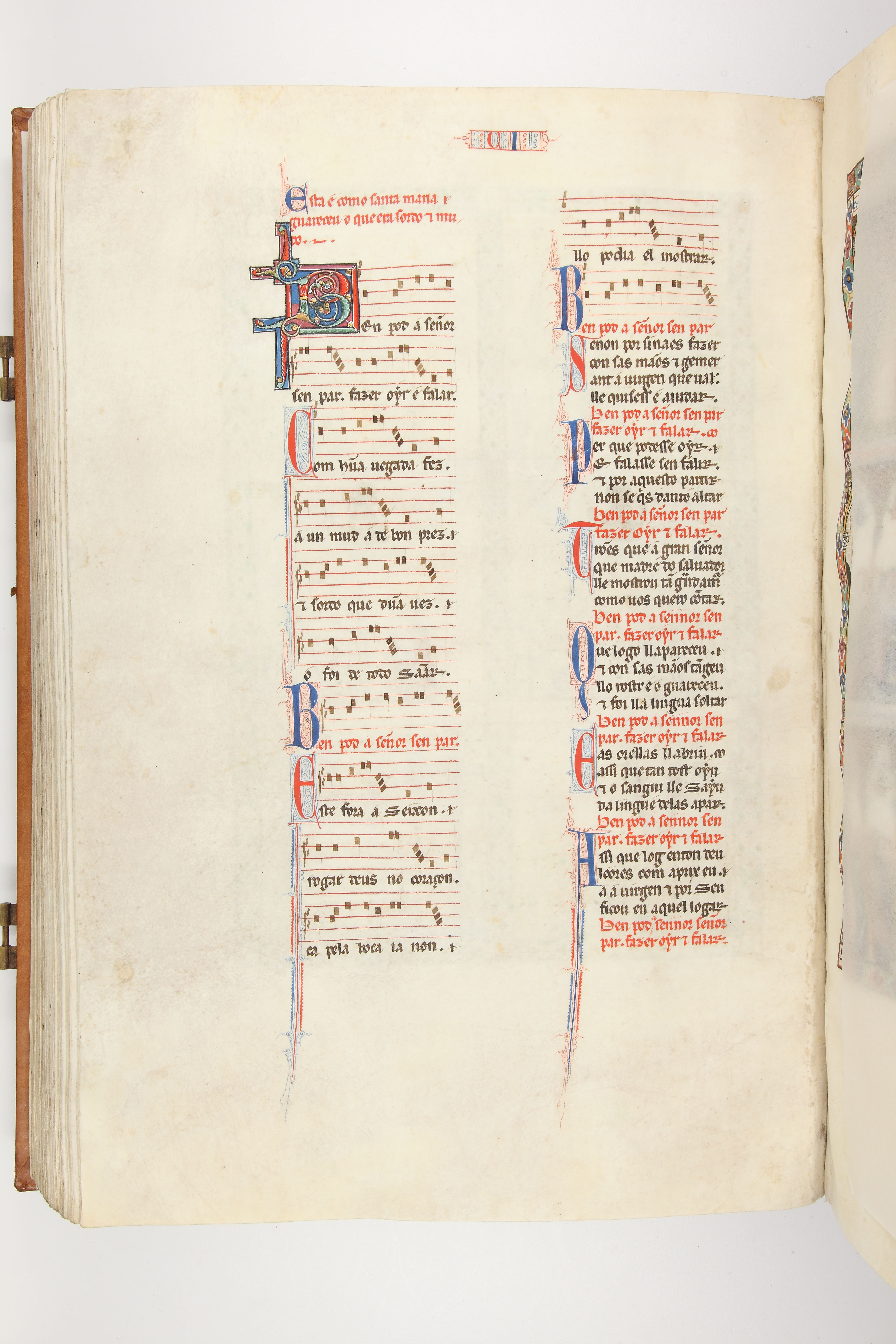
- a. 1284, Alfonso X of Castile, Cantigas de Santa Maria, Códice rico, cantiga 101 (facsimile):
- Que logo llapareceu.Category:Old Galician-Portuguese terms with quotations#LINGUA
⁊ e con ſas mãoſ tãgeu
llo roſtr e o guareceu.
⁊ foi lla lingua ſoltar
Ben pod a ſennoꝛ ſen
par. faʒer oyr ⁊ falar- What then appeared to [somebody], and touched [somebody] with its hands, cured [somebody’s] face, and was to explain [it] in [somebody’s] language. One can well hear and speak to this gentleman without equal.
Descendants
References
- Seoane, Ernesto Xosé González; Granja, María Álvarez de la; Agrelo, Ana Isabel Boullón (2006–2022), “lingua”, in Dicionario de Dicionarios do galego medieval [Dictionary of dictionaries of Medieval Galician] (in Galician), Santiago de Compostela: Instituto da Lingua Galega
- Ferreiro, Manuel (2014–2026), “lingua”, in Universo Cantigas: edición crítica da poesía medieval galego-portuguesa [Universo Cantigas: critical edition of Galician-Portuguese medieval poetry] (in Galician), A Coruña: University of A Coruña, →ISSN
Portuguese
Noun
lingua f (plural linguas)Category:Portuguese lemmas#LINGUACategory:Portuguese nouns#LINGUACategory:Portuguese countable nouns#LINGUACategory:Portuguese entries with incorrect language header#LINGUACategory:Portuguese feminine nouns#LINGUACategory:Pages with entries#LINGUACategory:Pages with 13 entries#LINGUA
- pre-reform spelling (used until 1943 in Brazil and 1911 in Portugal) of línguaCategory:Portuguese forms superseded in 1943#LINGUACategory:Portuguese forms superseded in 1911#LINGUA
Romansh
Etymology
Inherited from LatinCategory:Romansh terms inherited from Latin#LINGUACategory:Romansh terms derived from Latin#LINGUA lingua (“tongue, speech, language”).
Category:Romansh terms derived from Proto-Italic#LINGUACategory:Romansh terms inherited from Proto-Italic#LINGUACategory:Romansh terms derived from Proto-Indo-European#LINGUACategory:Romansh terms inherited from Proto-Indo-European#LINGUANoun
lingua fCategory:Romansh lemmas#LINGUACategory:Romansh nouns#LINGUACategory:Romansh entries with incorrect language header#LINGUACategory:Romansh feminine nouns#LINGUACategory:Pages with entries#LINGUACategory:Pages with 13 entries#LINGUA (plural linguas)
- (Rumantsch GrischunCategory:Rumantsch Grischun#LINGUA, PuterCategory:Puter Romansh#LINGUA, ValladerCategory:Vallader Romansh#LINGUA, countableCategory:Romansh countable nouns#LINGUA) language (a body of words, and set of methods of combining them (called a grammar), understood by a community and used as a form of communication)
Sicilian
Noun
lingua f (plural lingui)Category:Sicilian lemmas#LINGUACategory:Sicilian nouns#LINGUACategory:Sicilian entries with incorrect language header#LINGUACategory:Sicilian feminine nouns#LINGUACategory:Pages with entries#LINGUACategory:Pages with 13 entries#LINGUA