ave
Danish • Esperanto • Friulian • Galician • Indonesian • Interlingua • Italian • Kabuverdianu • Latin • Northern Sami • Norwegian Bokmål • Norwegian Nynorsk • Old Galician-Portuguese • Polish • Portuguese • Romanian • Sardinian • Spanish • Tolai • Venetan
Page categories
Translingual
Etymology
Clipping of EnglishCategory:Translingual terms derived from English#AVE AvestanCategory:Translingual clippings#AVE.
Symbol
aveCategory:Translingual lemmas#AVECategory:Translingual symbols#AVECategory:Translingual terms with redundant script codes#AVECategory:Translingual entries with incorrect language header#AVECategory:Pages with entries#AVECategory:Pages with 22 entries#AVE
See also
English
Etymology 1
From LatinCategory:English terms derived from Latin#AVE ave.
Pronunciation
- IPA(key): /ˈɑːveɪ/, /ˈæveɪ/, /ˈeɪvi/Category:English 2-syllable words#AVECategory:English 2-syllable words#AVECategory:English 2-syllable words#AVECategory:English terms with IPA pronunciation#AVE
Category:English terms with audio pronunciation#AVEAudio (Southern England): (file) - Rhymes: -ɑːveɪ, -æveɪ, -eɪviCategory:Rhymes:English/ɑːveɪ#AVECategory:Rhymes:English/ɑːveɪ/2 syllables#AVECategory:Rhymes:English/æveɪ#AVECategory:Rhymes:English/æveɪ/2 syllables#AVECategory:Rhymes:English/eɪvi#AVECategory:Rhymes:English/eɪvi/2 syllables#AVE
Noun
ave (plural aves)Category:English lemmas#AVECategory:English nouns#AVECategory:English countable nouns#AVECategory:English entries with incorrect language header#AVECategory:Pages with entries#AVECategory:Pages with 22 entries#AVE
- An Ave Maria.
- 1913, “Danny Boy”, Frederic Weatherly (lyrics):
- Ye’ll come and find the place where I am lyingCategory:English terms with quotations#AVE
And kneel and say an ave there for me.
- A reverential salutation.
Interjection
aveCategory:English lemmas#AVECategory:English interjections#AVECategory:English entries with incorrect language header#AVECategory:Pages with entries#AVECategory:Pages with 22 entries#AVE
- A reverential salutation.
Etymology 2
Abbreviation.
Alternative forms
Pronunciation
Noun
ave (plural aves)Category:English lemmas#AVECategory:English nouns#AVECategory:English countable nouns#AVECategory:English entries with incorrect language header#AVECategory:Pages with entries#AVECategory:Pages with 22 entries#AVE
- Abbreviation of avenueCategory:English abbreviations#AVE.
- 2021, Colson Whitehead, Harlem Shuffle, Fleet, page 267:
- Eleven blocks up the ave from his parents but a different city.Category:English terms with quotations#AVE
- Abbreviation of averageCategory:English abbreviations#AVE.
Anagrams
Danish
Etymology 1
Category:Danish terms derived from Proto-Indo-European#AVECategory:Danish terms derived from the Proto-Indo-European root *h₂egʰ-#AVEFrom Old DanishCategory:Danish terms inherited from Old Danish#AVECategory:Danish terms derived from Old Danish#AVE aughæ, from Old NorseCategory:Danish terms inherited from Old Norse#AVECategory:Danish terms derived from Old Norse#AVE agi (“fear, discipline”), from Proto-GermanicCategory:Danish terms inherited from Proto-Germanic#AVECategory:Danish terms derived from Proto-Germanic#AVE *agô, form of *agaz (“fear, dread”), from Proto-Indo-EuropeanCategory:Danish terms derived from Proto-Indo-European#AVE *h₂égʰos, from *h₂egʰ- (“to be upset, afraid”).
Noun
ave cCategory:Danish lemmas#AVECategory:Danish nouns#AVECategory:Danish entries with incorrect language header#AVECategory:Danish common-gender nouns#AVECategory:Pages with entries#AVECategory:Pages with 22 entries#AVE
- discipline, keeping in check
- Du skal holde forureningen i ave.Category:Danish terms with usage examples#AVE
- You must keep the pollution in check.
Etymology 2
From LatinCategory:Danish terms derived from Latin#AVE āve.
Noun
ave n (singular definite avet, plural indefinite ave)Category:Danish lemmas#AVECategory:Danish nouns#AVECategory:Danish entries with incorrect language header#AVECategory:Danish neuter nouns#AVECategory:Pages with entries#AVECategory:Pages with 22 entries#AVE
Inflection
Etymology 3
From Old NorseCategory:Danish terms derived from Old Norse#AVE aga (“frighten, scare”), from Proto-GermanicCategory:Danish terms derived from Proto-Germanic#AVE *agōną
Verb
ave (imperative av, infinitive at ave, present tense aver, past tense avede, perfect tense avetCategory:Danish links with redundant wikilinks#AVECategory:Danish links with redundant alt parameters#AVE)Category:Danish lemmas#AVECategory:Danish verbs#AVECategory:Danish entries with incorrect language header#AVECategory:Pages with entries#AVECategory:Pages with 22 entries#AVE
Conjugation
References
- “ave” in Den Danske Ordbog
- “ave” in Ordbog over det danske Sprog
Esperanto
Etymology
Pronunciation
Adverb
aveCategory:Esperanto lemmas#AVECategory:Esperanto adverbs#AVECategory:Esperanto entries with incorrect language header#AVECategory:Pages with entries#AVECategory:Pages with 22 entries#AVE
- grandfatherly (in the manner or way of a grandfather)
Friulian
Etymology
From LatinCategory:Friulian terms inherited from Latin#AVECategory:Friulian terms derived from Latin#AVE ava.
Noun
ave f (plural avis)Category:Friulian lemmas#AVECategory:Friulian nouns#AVECategory:Friulian entries with incorrect language header#AVECategory:Friulian feminine nouns#AVECategory:Pages with entries#AVECategory:Pages with 22 entries#AVE
Synonyms
Related terms
Galician
Etymology
From Old Galician-PortugueseCategory:Galician terms inherited from Old Galician-Portuguese#AVECategory:Galician terms derived from Old Galician-Portuguese#AVE ave, from LatinCategory:Galician terms inherited from Latin#AVECategory:Galician terms derived from Latin#AVE avis, avem, from Proto-Indo-EuropeanCategory:Galician terms derived from Proto-Indo-European#AVE *h₂éwis.
Pronunciation
Noun
ave f (plural aves)Category:Galician lemmas#AVECategory:Galician nouns#AVECategory:Galician countable nouns#AVECategory:Galician entries with incorrect language header#AVECategory:Galician feminine nouns#AVECategory:Pages with entries#AVECategory:Pages with 22 entries#AVE
References
- Seoane, Ernesto Xosé González; Granja, María Álvarez de la; Agrelo, Ana Isabel Boullón (2006–2022), “ave”, in Dicionario de Dicionarios do galego medieval [Dictionary of dictionaries of Medieval Galician] (in Galician), Santiago de Compostela: Instituto da Lingua Galega
- Barreiro, Xavier Varela; Guinovart, Xavier Gómez (2006–2018), “ave”, in Corpus Xelmírez: corpus lingüístico da Galicia medieval [Corpus Xelmírez: linguistic corpus of Medieval Galicia] (in Galician), Santiago de Compostela: Instituto da Lingua Galega
- Antón Luís Santamarina Fernández, editor (2006–2013), “ave”, in Dicionario de Dicionarios da lingua galega [Dictionary of Dictionaries of the Galician language] (in Galician), Santiago de Compostela: Instituto da Lingua Galega
- Antón Luís Santamarina Fernández, Ernesto Xosé González Seoane, María Álvarez de la Granja, editors (2003–2018), “ave”, in Tesouro informatizado da lingua galega (in Galician), Santiago de Compostela: Instituto da Lingua Galega
- Rosario Álvarez Blanco, editor (2014–2024), “ave”, in Tesouro do léxico patrimonial galego e portugués (in Galician), Santiago de Compostela: Instituto da Lingua Galega, →ISSN Category:gl:Birds#AVE
Indonesian

Etymology 1
Borrowed from Uma' LungCategory:Indonesian terms borrowed from Uma' Lung#AVECategory:Indonesian terms derived from Uma' Lung#AVE [Term?]Category:Uma' Lung term requests#AVE.
Pronunciation
- (Standard Indonesian) IPA(key): /ˈave/ [ˈa.fe]Category:Indonesian 2-syllable words#AVECategory:Indonesian terms with IPA pronunciation#AVE
- Rhymes: -aveCategory:Rhymes:Indonesian/ave#AVECategory:Rhymes:Indonesian/ave/2 syllables#AVE
- Syllabification: a‧ve
Noun
ave (plural ave-ave)Category:Indonesian lemmas#AVECategory:Indonesian nouns#AVECategory:Indonesian entries with incorrect language header#AVECategory:Pages with entries#AVECategory:Pages with 22 entries#AVE
- blade
- Synonym: mata pisau
Etymology 2
Borrowed from LatinCategory:Indonesian terms borrowed from Latin#AVECategory:Indonesian terms derived from Latin#AVE avē̆ (“hail, hello, farewell, greetings”).
Pronunciation
- (Standard Indonesian) IPA(key): /ˈave/ [ˈa.fe]Category:Indonesian 2-syllable words#AVECategory:Indonesian terms with IPA pronunciation#AVE
- Rhymes: -aveCategory:Rhymes:Indonesian/ave#AVECategory:Rhymes:Indonesian/ave/2 syllables#AVE
- Syllabification: a‧ve
Interjection
aveCategory:Indonesian lemmas#AVECategory:Indonesian interjections#AVECategory:Indonesian entries with incorrect language header#AVECategory:Pages with entries#AVECategory:Pages with 22 entries#AVE
Further reading
- “ave”, in Kamus Besar Bahasa Indonesia [Great Dictionary of the Indonesian Language] (in Indonesian), Jakarta: Agency for Language Development and Cultivation – Ministry of Education, Culture, Research, and Technology of the Republic of Indonesia, 2016
Interlingua
Etymology 1
From LatinCategory:Interlingua terms derived from Latin#AVE avis.
Noun
ave (plural aves)Category:Interlingua lemmas#AVECategory:Interlingua nouns#AVECategory:Interlingua entries with incorrect language header#AVECategory:Pages with entries#AVECategory:Pages with 22 entries#AVE
Etymology 2
From LatinCategory:Interlingua terms derived from Latin#AVE ave.
Interjection
aveCategory:Interlingua lemmas#AVECategory:Interlingua interjections#AVECategory:Interlingua entries with incorrect language header#AVECategory:Pages with entries#AVECategory:Pages with 22 entries#AVE
Italian
Etymology
From LatinCategory:Italian terms derived from Latin#AVE ave.
Pronunciation
Interjection
aveCategory:Italian lemmas#AVECategory:Italian interjections#AVECategory:Italian entries with incorrect language header#AVECategory:Pages with entries#AVECategory:Pages with 22 entries#AVE
Noun
ave fCategory:Italian non-lemma forms#AVECategory:Italian noun forms#AVECategory:Italian entries with incorrect language header#AVECategory:Pages with entries#AVECategory:Pages with 22 entries#AVE
Anagrams
Kabuverdianu
Alternative forms
Etymology
From PortugueseCategory:Kabuverdianu terms derived from Portuguese#AVE ave.
Noun
aveCategory:Kabuverdianu lemmas#AVECategory:Kabuverdianu nouns#AVECategory:Kabuverdianu entries with incorrect language header#AVECategory:Pages with entries#AVECategory:Pages with 22 entries#AVE
References
- Gonçalves, Manuel (2015), Capeverdean Creole-English dictionary, →ISBN
- Veiga, Manuel (2012), Dicionário Caboverdiano-Português, Instituto da Biblioteca Nacional e do Livro
Latin
Etymology 1
Borrowed with an unspelled /h/ from PunicCategory:Latin terms borrowed from Punic#AVECategory:Latin terms derived from Punic#AVE [script needed]Category:Requests for native script for Punic terms#AVE (ḥawe, “live!”, 2sg. imp.), cognate to Hebrew חוה (“Chava, the biblical Eve”), and as avō from Punic [script needed]Category:Requests for native script for Punic terms#AVE (ḥawū, 2pl. imp.), from Semitic root ḥ-w-y (live). The form might have been contaminated by Etymology 2, especially as the latter one's long vowel also ended up short via iambic shortening; this would explain the reluctance to spell the aspirate, as well as its interpretation as a verb form. Attested since Plautus.
Alternative forms
Pronunciation
- (Classical Latin) IPA(key): [ˈha.weː], [ˈha.wɛ]Category:Latin 2-syllable words#AVECategory:Latin 2-syllable words#AVECategory:Latin terms with IPA pronunciation#AVE
- (modern Italianate Ecclesiastical) IPA(key): [ˈaː.ve]Category:Latin 2-syllable words#AVECategory:Latin terms with IPA pronunciation#AVE
- Note: around the 1st c. A.D., the current pronunciation remained the etymological havĕ, with the long-vowel unaspirated form possible as a literary affectation, or as a poetic license.[1]
Interjection
avē̆Category:Latin lemmas#AVECategory:Latin interjections#AVECategory:Latin entries with incorrect language header#AVECategory:Pages with entries#AVECategory:Pages with 22 entries#AVE
- hail, hello, farewell, greetings! (a formal expression of greeting)
- Synonym: (h)avētōCategory:Latin links with redundant wikilinks#AVE
- Ave Maria, gratia plena, Dominus tecum.
- Avē̆ atque valē!Category:Latin terms with usage examples#AVE
- Hail and farewell! (esp. before a long departure and as a last good-bye to the dead).
- Avē̆ imperātor, moritūrī tē salūtant!Category:Latin terms with usage examples#AVE
- Hail, commander, the ones going to their deaths salute you!
Usage notes
- Outside of grammarians, the plural (h)avēte is attested only once in Apuleius, who is known for affecting archaisms. This suggests that this greeting didn't usually inflect for number, reflecting its originally being an interjection and not a verbal form; nevertheless, it was eventually widely interpreted as the latter.
- The other verbal forms cited by grammarians are the future imperative avētō tū, ille (“greetings to you, him”) etc., and the infinitive in the circumlocution avēre tē volō (after the same use with valēre and the very rare salvēre).
Derived terms
Etymology 2
See the etymology of the corresponding lemma form.
Pronunciation
Verb
avēCategory:Latin non-lemma forms#AVECategory:Latin verb forms#AVECategory:Latin entries with incorrect language header#AVECategory:Pages with entries#AVECategory:Pages with 22 entries#AVE
Etymology 3
Pronunciation
Noun
ave mCategory:Latin non-lemma forms#AVECategory:Latin noun forms#AVECategory:Latin entries with incorrect language header#AVECategory:Pages with entries#AVECategory:Pages with 22 entries#AVE
Etymology 4
Pronunciation
Noun
ave fCategory:Latin non-lemma forms#AVECategory:Latin noun forms#AVECategory:Latin entries with incorrect language header#AVECategory:Pages with entries#AVECategory:Pages with 22 entries#AVE
References
- “avē, havē” in the Thesaurus Linguae Latinae (TLL Open Access), Berlin (formerly Leipzig): De Gruyter (formerly Teubner), 1900–present
- ↑ Marcus Fabius Quintilianus (1 April 2021 (last accessed)), “Declamationes Minores”, in latin.packhum.org (in Latin), 1.6.1.1
Further reading
- “ave”, in Gaffiot, Félix (1934), Dictionnaire illustré latin-français, Hachette.
- "ave", in Charles du Fresne du Cange, Glossarium Mediæ et Infimæ Latinitatis (augmented edition with additions by D. P. Carpenterius, Adelungius and others, edited by Léopold Favre, 1883–1887) Category:Latin greetings#AVE
Northern Sami
Pronunciation
Verb
aveCategory:Northern Sami non-lemma forms#AVECategory:Northern Sami verb forms#AVECategory:Northern Sami entries with incorrect language header#AVECategory:Pages with entries#AVECategory:Pages with 22 entries#AVE
- inflection of avvit:
Norwegian Bokmål
Etymology
From LatinCategory:Norwegian Nynorsk terms derived from Latin#AVE ave (“hail!”).
Noun
ave n (definite singular avet, indefinite plural aver, definite plural ava or avene)Category:Norwegian Bokmål lemmas#AVECategory:Norwegian Bokmål nouns#AVECategory:Norwegian Bokmål entries with incorrect language header#AVECategory:Norwegian Bokmål neuter nouns#AVECategory:Pages with entries#AVECategory:Pages with 22 entries#AVE
- An Ave Maria
References
- “ave” in The Bokmål Dictionary.
Anagrams
Norwegian Nynorsk
Etymology
From LatinCategory:Norwegian Nynorsk terms derived from Latin#AVE ave (“hail!”).
Noun
ave n (definite singular avet, indefinite plural ave, definite plural ava)Category:Norwegian Nynorsk lemmas#AVECategory:Norwegian Nynorsk nouns#AVECategory:Norwegian Nynorsk entries with incorrect language header#AVECategory:Norwegian Nynorsk neuter nouns#AVECategory:Pages with entries#AVECategory:Pages with 22 entries#AVE
- An Ave Maria
References
- “ave” in The Nynorsk Dictionary.
Anagrams
Old Galician-Portuguese
Etymology 1
From LatinCategory:Old Galician-Portuguese terms inherited from Latin#AVECategory:Old Galician-Portuguese terms derived from Latin#AVE avis (“bird”), from Proto-ItalicCategory:Old Galician-Portuguese terms inherited from Proto-Italic#AVECategory:Old Galician-Portuguese terms derived from Proto-Italic#AVE *awis (“bird”), from Proto-Indo-EuropeanCategory:Old Galician-Portuguese terms inherited from Proto-Indo-European#AVECategory:Old Galician-Portuguese terms derived from Proto-Indo-European#AVE *h₂éwis (“bird”).
Pronunciation
Noun
ave f (plural aves)Category:Old Galician-Portuguese lemmas#AVECategory:Old Galician-Portuguese nouns#AVECategory:Old Galician-Portuguese entries with incorrect language header#AVECategory:Old Galician-Portuguese feminine nouns#AVECategory:Pages with entries#AVECategory:Pages with 22 entries#AVE
- bird
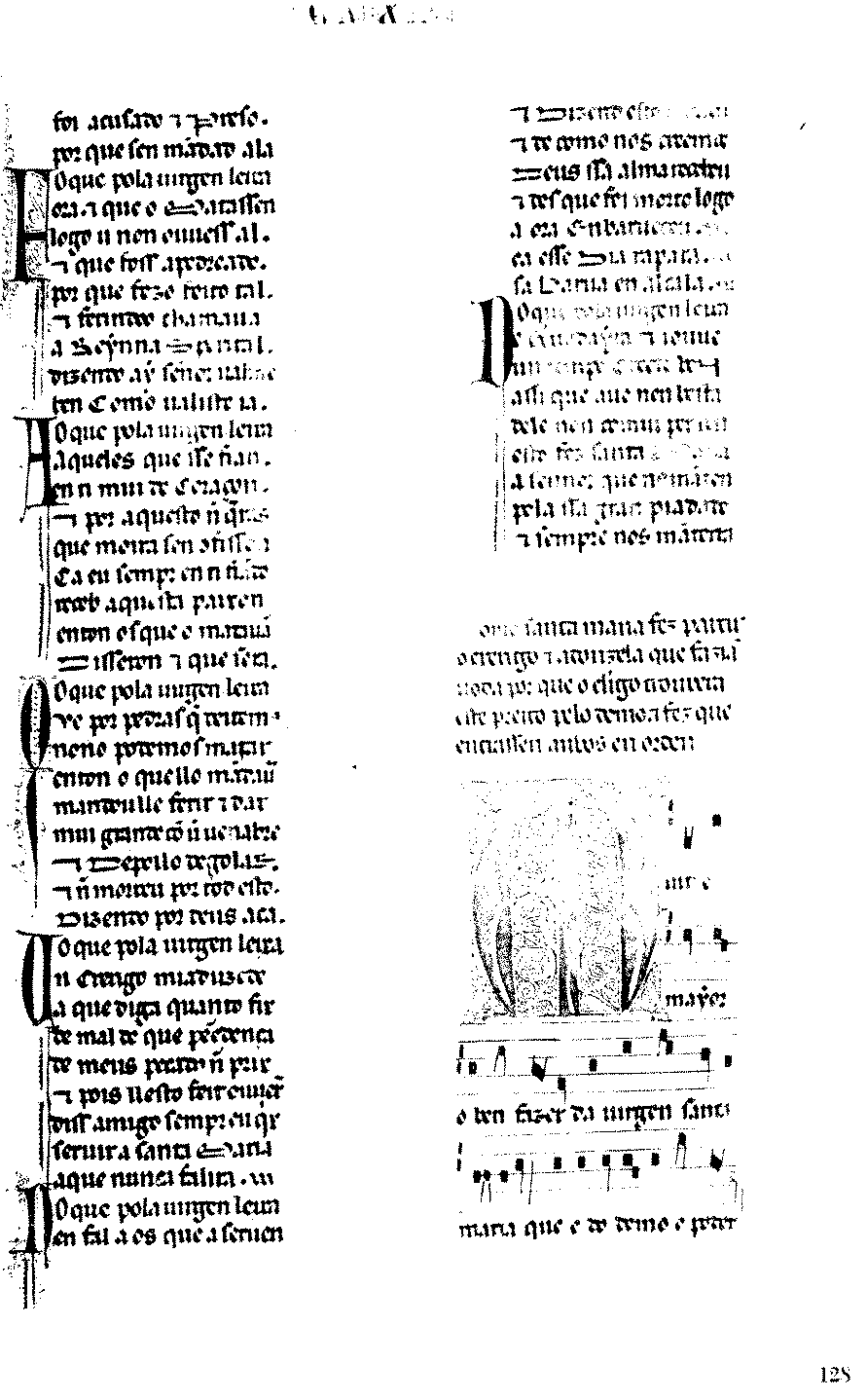
- a. 1284, Alfonso X of Castile, Cantigas de Santa Maria, Códice de los músicos, cantiga 124 (facsimile):
- aue nen beſta dele non comiu per ren.
- Neither bird nor beast would eat him for anything.
- aue nen beſta dele non comiu per ren.
Descendants
Etymology 2
From LatinCategory:Old Galician-Portuguese terms derived from Latin#AVE avē (“hail”).
Pronunciation
- IPA(key): /ˈa.βe/, /a.ˈβɛ/Category:Old Galician-Portuguese terms with IPA pronunciation#AVE
Noun
ave f (plural aves)Category:Old Galician-Portuguese lemmas#AVECategory:Old Galician-Portuguese nouns#AVECategory:Old Galician-Portuguese entries with incorrect language header#AVECategory:Old Galician-Portuguese feminine nouns#AVECategory:Pages with entries#AVECategory:Pages with 22 entries#AVE
- hail (introduces a formal greeting)
-
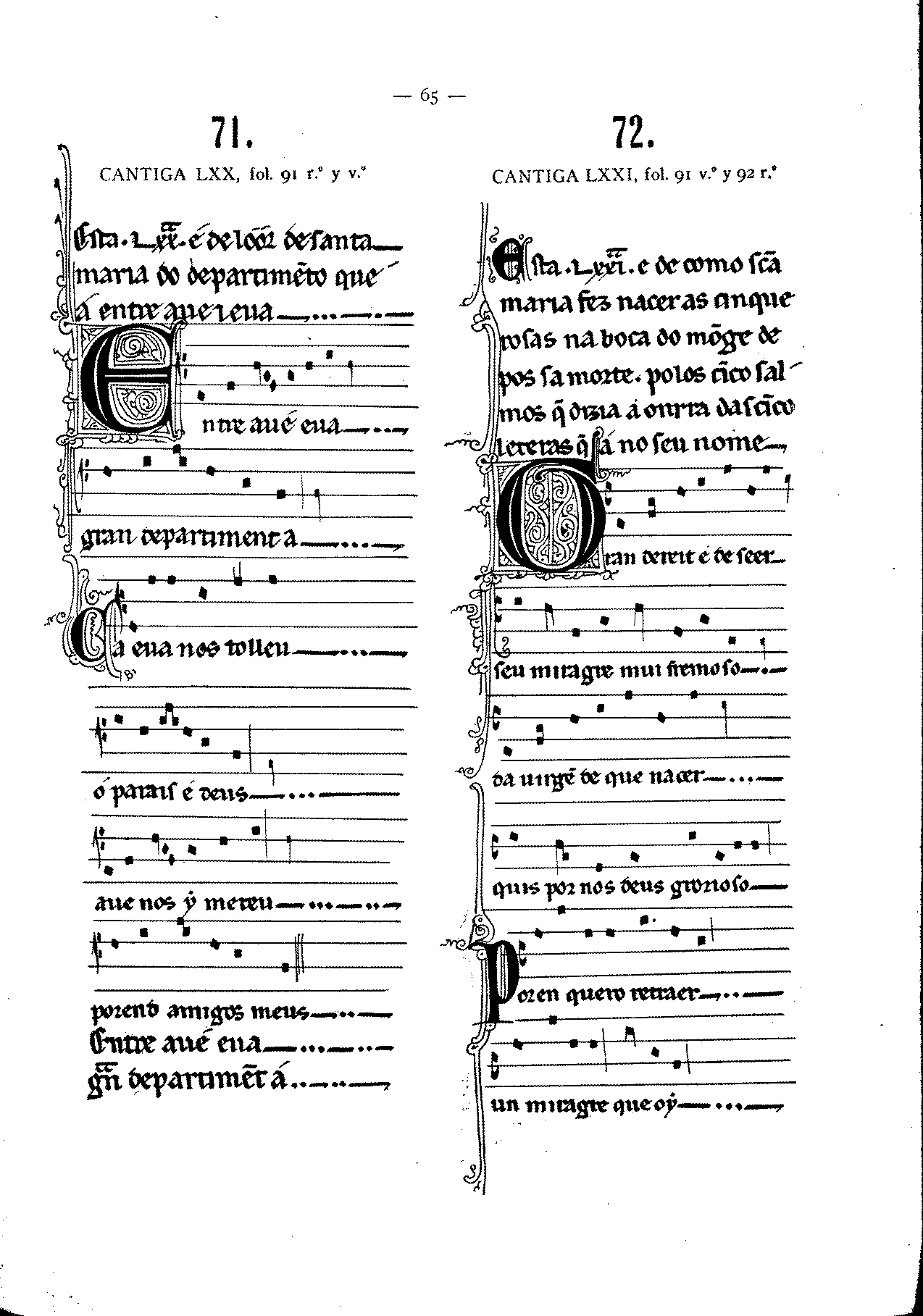
- Entre aue eua gran departimenta.
- (Entre Av'e Eva gran departiment'a)
- Between ave and Eve there is a great difference.
-
Descendants
Polish
Etymology
Unadapted borrowing from Latin avē̆.
Category:Polish entries referencing missing etymons#AVECategory:Polish unadapted borrowings from Latin#AVE%7CAVECategory:Polish terms borrowed from Latin#AVE%7CAVECategory:Polish terms derived from Latin#AVECategory:Polish terms derived from Latin#AVE%7CAVECategory:Pages with etymology trees#AVECategory:Polish entries with etymology trees#AVECategory:Polish entries with etymology texts#AVECategory:Pages using etymon with no ID#AVEPronunciation
- IPA(key): /ˈa.vɛ/Category:Polish 2-syllable words#AVECategory:Polish terms with IPA pronunciation#AVE
- Rhymes: -avɛCategory:Rhymes:Polish/avɛ#AVECategory:Rhymes:Polish/avɛ/2 syllables#AVE
- Syllabification: a‧ve
Interjection
aveCategory:Polish lemmas#AVECategory:Polish interjections#AVECategory:Polish terms spelled with V#AVECategory:Polish entries with incorrect language header#AVECategory:Pages with entries#AVECategory:Pages with 22 entries#AVE
- (literaryCategory:Polish literary terms#AVE) ave (reverential salutation)
Further reading
- “ave”, in Polish dictionaries at PWN (in Polish) Category:Polish greetings#AVE
Portuguese
Etymology 1
From Old Galician-PortugueseCategory:Portuguese terms inherited from Old Galician-Portuguese#AVECategory:Portuguese terms derived from Old Galician-Portuguese#AVE ave (“bird”), from LatinCategory:Portuguese terms inherited from Latin#AVECategory:Portuguese terms derived from Latin#AVE avis (“bird”), from Proto-ItalicCategory:Portuguese terms inherited from Proto-Italic#AVECategory:Portuguese terms derived from Proto-Italic#AVE *awis (“bird”), from Proto-Indo-EuropeanCategory:Portuguese terms inherited from Proto-Indo-European#AVECategory:Portuguese terms derived from Proto-Indo-European#AVE *h₂éwis (“bird”).
Pronunciation
Noun
ave f (plural aves, diminutive avezinha, augmentative avezona)Category:Portuguese lemmas#AVECategory:Portuguese nouns#AVECategory:Portuguese countable nouns#AVECategory:Portuguese nouns with red links in their headword lines#AVECategory:Portuguese entries with incorrect language header#AVECategory:Portuguese feminine nouns#AVECategory:Pages with entries#AVECategory:Pages with 22 entries#AVE
- bird
- Synonym: pássaro
- Todas as aves têm asas. ― All birds have wings.Category:Portuguese terms with usage examples#AVE
Descendants
- Kabuverdianu: avi
Etymology 2
From Old Galician-PortugueseCategory:Portuguese terms derived from Old Galician-Portuguese#AVE ave, from LatinCategory:Portuguese terms derived from Latin#AVE avē (“hail”).
Pronunciation
- Hyphenation: a‧ve
Interjection
ave!Category:Portuguese lemmas#AVECategory:Portuguese interjections#AVECategory:Portuguese entries with incorrect language header#AVECategory:Pages with entries#AVECategory:Pages with 22 entries#AVE
- hail (introduces a formal greeting)
- Synonym: salve
- Ave César!Category:Portuguese terms with usage examples#AVE
- Hail Caesar!
- clipping of ave MariaCategory:Portuguese clippings#AVE
Derived terms
Further reading
- “ave”, in Dicionário Aulete Digital (in Portuguese), Rio de Janeiro: Lexikon Editora Digital, 2008–2026
- “ave”, in Dicionário Priberam da Língua Portuguesa (in Portuguese), Lisbon: Priberam, 2008–2026 Category:Portuguese greetings#AVE
Romanian
Etymology
Borrowed from LatinCategory:Romanian terms borrowed from Latin#AVECategory:Romanian terms derived from Latin#AVE ave.
Interjection
aveCategory:Romanian lemmas#AVECategory:Romanian interjections#AVECategory:Romanian entries with incorrect language header#AVECategory:Pages with entries#AVECategory:Pages with 22 entries#AVE
- ave (salutation)
References
- ave in Academia Română, Micul dicționar academic, ediția a II-a, Bucharest: Univers Enciclopedic, 2010. →ISBN Category:Romanian greetings#AVE
Sardinian
Pronunciation
- IPA(key): /ˈabe/, [ˈäː.β̞ɛ]Category:Sardinian terms with IPA pronunciation#AVE
Noun
ave f (plural aves)Category:Sardinian lemmas#AVECategory:Sardinian nouns#AVECategory:Sardinian entries with incorrect language header#AVECategory:Sardinian feminine nouns#AVECategory:Pages with entries#AVECategory:Pages with 22 entries#AVE
- (NuoreseCategory:Nuorese#AVE) alternative form of ae
Spanish
Pronunciation
- IPA(key): /ˈabe/ [ˈa.β̞e]Category:Spanish 2-syllable words#AVECategory:Spanish terms with IPA pronunciation#AVE
Category:Spanish terms with audio pronunciation#AVEAudio (Spain): (file) - Rhymes: -abeCategory:Rhymes:Spanish/abe#AVECategory:Rhymes:Spanish/abe/2 syllables#AVE
- Syllabification: a‧ve
Etymology 1
Category:Spanish terms derived from Proto-Italic#AVECategory:Spanish terms derived from Proto-Indo-European#AVEInherited from Old SpanishCategory:Spanish terms inherited from Old Spanish#AVECategory:Spanish terms derived from Old Spanish#AVE ave, from LatinCategory:Spanish terms inherited from Latin#AVECategory:Spanish terms derived from Latin#AVE avem, from Proto-ItalicCategory:Spanish terms inherited from Proto-Italic#AVECategory:Spanish terms derived from Proto-Italic#AVE *awim, from Proto-Indo-EuropeanCategory:Spanish terms inherited from Proto-Indo-European#AVECategory:Spanish terms derived from Proto-Indo-European#AVE *h₂éwim.
Noun
ave f (plural aves)Category:Spanish lemmas#AVECategory:Spanish nouns#AVECategory:Spanish countable nouns#AVECategory:Spanish entries with incorrect language header#AVECategory:Spanish feminine nouns#AVECategory:Pages with entries#AVECategory:Pages with 22 entries#AVE
Usage notes
- Before feminine nouns beginning with stressed /ˈa/ like ave, the singular definite article takes the form of el (otherwise reserved for masculine nouns) instead of the usual la: el aveCategory:Spanish usage examples with omitted translation#AVE. This includes the contracted forms al and del (instead of a la and de la, respectively): al ave, del aveCategory:Spanish usage examples with omitted translation#AVE.
- This also applies to the indefinite article, which takes the form of un, which is otherwise used with masculine nouns (although the standard feminine form una also occurs): un aveCategory:Spanish usage examples with omitted translation#AVE or una aveCategory:Spanish usage examples with omitted translation#AVE. The same is true with determiners algún/alguna and ningún/ninguna, as well as for numerals ending with 1 (e.g., veintiún/veintiuna).
- However, if another word intervenes between the article and the noun, the usual feminine singular articles and determiners (la, una etc.) are used: la mejor aveCategory:Spanish usage examples with omitted translation#AVE, una buena aveCategory:Spanish usage examples with omitted translation#AVE.
- In these cases, el and un are not masculine but feminine, deriving from Latin illa and una, respectively, even though they are identical in form to the corresponding masculine singular articles. Thus, they are allomorphs of the feminine singular articles la and una.
- The use of these allomorphs does not change the gender agreement of the adjectives modifying the feminine noun: el ave únicaCategory:Spanish usage examples with omitted translation#AVE, un(a) ave buenaCategory:Spanish usage examples with omitted translation#AVE.
- In the plural, the usual feminine plural articles and determiners (las, unas, etc.) are always used.
- Ave is also the scientific term, while pájaro is used more in common speech for the smaller birds.
Hyponyms
- See also Category:es:Birds.
Derived terms
- ave acuática (“water bird”)
- ave cantora (“songbird”)
- ave de corral (“poultry”)
- ave de percha
- ave del paraíso (“bird of paradise”)
- ave lira
- ave marina (“sea bird”)
- ave martillo
- ave migratoria, ave de paso, ave pasajera (“migratory bird”)
- ave nocturna
- ave pasajera
- ave rapaz, ave de rapiña, ave rapiega (“bird of prey”)
- ave zancuda (“wading bird”)
- avecilla
- avefría (“lapwing”)
- avestruz (“ostrich”)
- aviar
- nido de ave
Related terms
Etymology 2
Inherited from Old SpanishCategory:Spanish terms inherited from Old Spanish#AVECategory:Spanish terms derived from Old Spanish#AVE ave, from LatinCategory:Spanish terms derived from Latin#AVE avē (“hello, hail”).Category:Requests for attention concerning Spanish#AVE
Interjection
aveCategory:Spanish lemmas#AVECategory:Spanish interjections#AVECategory:Spanish entries with incorrect language header#AVECategory:Pages with entries#AVECategory:Pages with 22 entries#AVE
Etymology 3
From the acronym AVE (Alta Velocidad Española), meaning high-speed train (written mostly all caps).
Noun
ave f (plural aves)Category:Spanish lemmas#AVECategory:Spanish nouns#AVECategory:Spanish countable nouns#AVECategory:Spanish entries with incorrect language header#AVECategory:Spanish feminine nouns#AVECategory:Pages with entries#AVECategory:Pages with 22 entries#AVE
- (SpainCategory:Peninsular Spanish#AVE) high-speed train
- Cogeremos el ave el día 23 por la tarde.Category:Spanish terms with usage examples#AVE
- We will take the train on the 23rd in the afternoon.
Further reading
- “ave”, in Diccionario de la lengua española [Dictionary of the Spanish Language] (in Spanish), online version 23.8.1, Royal Spanish Academy [Spanish: Real Academia Española], 15 December 2025 Category:es:Birds#AVECategory:es:Meats#AVE Category:Spanish greetings#AVE
Tolai
Alternative forms
- avet (when not preceding a verb)
Pronoun
aveCategory:Tolai lemmas#AVECategory:Tolai pronouns#AVECategory:Tolai entries with incorrect language header#AVECategory:Pages with entries#AVECategory:Pages with 22 entries#AVE
- First-person exclusive plural pronoun: they (many) and I, them (many) and me
Declension
Venetan
Noun
aveCategory:Venetan non-lemma forms#AVECategory:Venetan noun forms#AVECategory:Venetan entries with incorrect language header#AVECategory:Pages with entries#AVECategory:Pages with 22 entries#AVE