hire
English
Pronunciation
- enPR: hīr, Rhymes: -aɪə(ɹ)Category:Rhymes:English/aɪə(ɹ)#HIRECategory:Rhymes:English/aɪə(ɹ)/1 syllable#HIRE
- enPR: hīʹər, Homophone: higher (most accents)Category:English terms with homophones#HIRE
- (Received Pronunciation) IPA(key): /ˈhaɪ(.)ə/Category:English 2-syllable words#HIRECategory:English terms with IPA pronunciation#HIRE
- (General American) IPA(key): /haɪɹ/, /ˈhaɪ.ɚ/Category:English 1-syllable words#HIRECategory:English 2-syllable words#HIRECategory:English terms with IPA pronunciation#HIRE
- (Indic) IPA(key): /həjɜ(r)/Category:English 2-syllable words#HIRECategory:English terms with IPA pronunciation#HIRE
Etymology 1
From Middle EnglishCategory:English terms inherited from Middle English#HIRECategory:English terms derived from Middle English#HIRE hire, hyre, here, hure, from Old EnglishCategory:English terms inherited from Old English#HIRECategory:English terms derived from Old English#HIRE hȳr (“employment for wages; pay for service; interest on money lent”), from Proto-West GermanicCategory:English terms inherited from Proto-West Germanic#HIRECategory:English terms derived from Proto-West Germanic#HIRE *hūʀiju (“payment”), from the verb *hūʀijan, from Proto-GermanicCategory:English terms inherited from Proto-Germanic#HIRECategory:English terms derived from Proto-Germanic#HIRE *hūzijaną, from Proto-Indo-EuropeanCategory:English terms derived from Proto-Indo-European#HIRE *kewHs- or *kweHs-. Compare Hittite 𒆪𒊭𒀭 (kuššan-, “fee, pay, wages, price”).
Cognate with West Frisian hier (“hire”), Dutch huur (“lease, rental”), German Low German Hüür (“lease, rental”).
Noun
hire (countable and uncountable, plural hires)Category:English lemmas#HIRECategory:English nouns#HIRECategory:English uncountable nouns#HIRECategory:English countable nouns#HIRECategory:English countable nouns#HIRECategory:English entries with incorrect language header#HIRECategory:Pages with entries#HIRECategory:Pages with 9 entries#HIRE
- (countableCategory:English countable nouns#HIRE) A person who has been hired, especially in a cohort.
- We pair up each of our new hires with one of our original hires.Category:English terms with usage examples#HIRE
- 2024 February 21, Nick Brodrick, “Inclusion and development for all”, in RAIL, number 1003, page 62:
- Employment statistics, the other key indicator of Diversity & Inclusion performance, shows that almost 30% of new Southeastern hires are women.Category:English terms with quotations#HIRE
- (uncountableCategory:English uncountable nouns#HIRE) The state of being hired, or having a job; employment.
- Synonym: employ
- When my grandfather retired, he had over twenty mechanics in his hire.Category:English terms with usage examples#HIRE
- (uncountableCategory:English uncountable nouns#HIRE) Payment for the temporary use of something.
- The sign offered pedalos on hire.Category:English terms with usage examples#HIRE
- (uncountableCategory:English uncountable nouns#HIRE, obsoleteCategory:English terms with obsolete senses#HIRE) Reward.
- 1590, Edmund Spenser, “Book II, Canto VIII”, in The Faerie Queene. […], London: […] [John Wolfe] for William Ponsonbie, →OCLC:
- I vvill him reaue of armes, the victors hire, / And of that ſhield, more vvorthy of good knight; / For vvhy ſhould a dead dog be deckt in armour bright?Category:English terms with quotations#HIRE
- c. 1598–1600 (date written), William Shakespeare, “As You Like It”, in Mr. William Shakespeares Comedies, Histories, & Tragedies […] (First Folio), London: […] Isaac Iaggard, and Ed[ward] Blount, published 1623, →OCLC, [Act II, scene iii], lines 682–683:
- I have five hundred crovvns, / The thrifty hire I ſav'd under your father […]Category:English terms with quotations#HIRE
- 1611, The Holy Bible, […] (King James Version), London: […] Robert Barker, […], →OCLC, Luke 10:7:
- The labourer is worthy of his hire.Category:English terms with quotations#HIRE
- 1619, Samuell Hieron, “The Worth of the Water of Life. Dauids Longing, and Dauids Loue. The Good Fight. [II. Tim[othy] 4. 7.]”, in The Sermons of Master Samuell Hieron, […], London: […] Iohn Beale [and John Legatt printer to the Uniuersitie of Cambridge for Thomas Man, Ioyce Macham, Cantrell Legge, and Simon Waterson], published 1620, →OCLC, pages 222–223:
- I haue ſeene a pardon giuen to a man vpon the gallovves, but vvho ſo emboldeneth himſelfe thereuypon, perhaps the rope may be his hire: it is not good to put it vpon the Pſalme of Miſerere, and the neck-verſe, for ſometime he prooues no clarke.Category:English terms with quotations#HIRE
Derived terms
Translations
Category:Entries with translation boxes#HIRE
|
Etymology 2
From Middle EnglishCategory:English terms inherited from Middle English#HIRECategory:English terms derived from Middle English#HIRE hiren, hyren, from Old EnglishCategory:English terms inherited from Old English#HIRECategory:English terms derived from Old English#HIRE hȳrian (“to hire”), from the noun (see above). Compare West Frisian hiere (“to rent, lease”), Dutch huren (“to rent, lease”), Low German hüren (“to rent”), Danish hyre (“to hire”), Swedish hyra (“to hire”).
Eclipsed Middle English souden (“to hire, employ, enlist”), borrowed from Old French souder, soudre, souldre (“to take into employ, pay”); see English sold (“salary, military pay”).
Verb
hire (third-person singular simple present hires, present participle hiring, simple past and past participle hired)Category:English lemmas#HIRECategory:English verbs#HIRECategory:English entries with incorrect language header#HIRECategory:Pages with entries#HIRECategory:Pages with 9 entries#HIRE
- (transitiveCategory:English transitive verbs#HIRE, chiefly UKCategory:British English#HIRE and AustraliaCategory:Australian English#HIRE) To obtain the services of in return for fixed payment.
- Synonym: rent
- We hired a car for two weeks because ours had broken down.Category:English terms with usage examples#HIRE
- 1918, W[illiam] B[abington] Maxwell, chapter XVI, in The Mirror and the Lamp, Indianapolis, Ind.: The Bobbs-Merrill Company, →OCLC:
- “ […] She takes the whole thing with desperate seriousness. But the others are all easy and jovial—thinking about the good fare that is soon to be eaten, about the hired fly, about anything.”Category:English terms with quotations#HIRE
- (transitiveCategory:English transitive verbs#HIRE, chiefly UKCategory:British English#HIRE) To occupy premises in exchange for rent.
- Synonym: rent
- 1854 August 9, Henry D[avid] Thoreau, “Economy”, in Walden; or, Life in the Woods, Boston, Mass.: Ticknor and Fields, →OCLC:
- I do not mean to insist here on the disadvantage of hiring compared with owning, but it is evident that the savage owns his shelter because it costs so little, while the civilized man hires his commonly because he cannot afford to own it; nor can he, in the long run, any better afford to hire.Category:English terms with quotations#HIRE
- (transitiveCategory:English transitive verbs#HIRE) To employ; to obtain the services of (a person) in exchange for remuneration; to give someone a job.
- The company had problems when it tried to hire more skilled workers.Category:English terms with usage examples#HIRE
- 1897 December (indicated as 1898), Winston Churchill, chapter X, in The Celebrity: An Episode, New York, N.Y.: The Macmillan Company; London: Macmillan & Co., Ltd., →OCLC:
- The skipper Mr. Cooke had hired at Far Harbor was a God-fearing man with a luke warm interest in his new billet and employer, and had only been prevailed upon to take charge of the yacht after the offer of an emolument equal to half a year's sea pay of an ensign in the navy.Category:English terms with quotations#HIRE
- (transitiveCategory:English transitive verbs#HIRE) To exchange the services of for remuneration.
- They hired themselves out as day laborers. They hired out their basement for Inauguration week.Category:English terms with usage examples#HIRE
- (transitiveCategory:English transitive verbs#HIRE, chiefly UKCategory:British English#HIRE) To accomplish by paying for services.
- After waiting two years for her husband to finish the tiling, she decided to hire it done.Category:English terms with usage examples#HIRE
- (intransitiveCategory:English intransitive verbs#HIRE) To accept employment.
- They hired out as day laborers.Category:English terms with usage examples#HIRE
- (transitiveCategory:English transitive verbs#HIRE) (neologismCategory:English neologisms#HIRE) (in the Jobs-to-be-Done Theory) To buy something in order for it to perform a function, to do a job
- They hired a milkshake.Category:English terms with usage examples#HIRE
Antonyms
- (antonym(s) of “to employ”): fire
Derived terms
Descendants
- → Hawaiian: hai
Translations
- The translations below need to be checked and inserted above into the appropriate translation tables. See instructions at Wiktionary:Entry layout § Translations.
See also
Anagrams
Category:en:People#HIREAkan
Etymology
Compare, in other varieties of Akan, hyire (“white clay”).
Noun
hireCategory:Akan lemmas#HIRECategory:Akan nouns#HIRECategory:Akan entries with incorrect language header#HIRECategory:Pages with entries#HIRECategory:Pages with 9 entries#HIRE
References
- Trutenau, Languages of the Akan Area: Papers in Western Kwa Linguistics (1976), page 38: "non-palatalisation of [h] before front vowels [... is a feature shared by] Ivory Coast Abron [...] white clay[:] Abron hire[,] Ghana Brong hire[,] cf. other Akan hyire"
Basque
Pronunciation
- IPA(key): (Navarro-Lapurdian) /hiɾe/ [hi.ɾe]Category:Basque 2-syllable words#HIRECategory:Basque terms with IPA pronunciation#HIRE
- IPA(key): (Southern) /iɾe/ [i.ɾe]Category:Basque 2-syllable words#HIRECategory:Basque terms with IPA pronunciation#HIRE
- Rhymes: -iɾe, -eCategory:Rhymes:Basque/iɾe#HIRECategory:Rhymes:Basque/iɾe/2 syllables#HIRECategory:Rhymes:Basque/e#HIRECategory:Rhymes:Basque/e/2 syllables#HIRE
- Hyphenation: hi‧re
Pronoun
hireCategory:Basque non-lemma forms#HIRECategory:Basque pronoun forms#HIRECategory:Basque personal pronoun forms#HIRECategory:Basque entries with incorrect language header#HIRECategory:Pages with entries#HIRECategory:Pages with 9 entries#HIRE
Japanese
Romanization
hireCategory:Japanese non-lemma forms#HIRECategory:Japanese romanizations#HIRECategory:Japanese terms with non-redundant manual script codes#HIRECategory:Japanese entries with incorrect language header#HIRECategory:Pages with entries#HIRECategory:Pages with 9 entries#HIRE
Middle Dutch
Contraction
hireCategory:Middle Dutch non-lemma forms#HIRECategory:Middle Dutch contractions#HIRECategory:Middle Dutch entries with incorrect language header#HIRECategory:Pages with entries#HIRECategory:Pages with 9 entries#HIRE
- contraction of hi + dāerCategory:Middle Dutch contractions#HIRE
Middle English
Etymology 1
From Old EnglishCategory:Middle English terms inherited from Old English#HIRECategory:Middle English terms derived from Old English#HIRE hire (“her”), from Proto-West GermanicCategory:Middle English terms inherited from Proto-West Germanic#HIRECategory:Middle English terms derived from Proto-West Germanic#HIRE *heʀā, *hiʀā, from Proto-GermanicCategory:Middle English terms inherited from Proto-Germanic#HIRECategory:Middle English terms derived from Proto-Germanic#HIRE *hezōz, genitive feminine singular of *hiz (“this”), from Proto-Indo-EuropeanCategory:Middle English terms inherited from Proto-Indo-European#HIRECategory:Middle English terms derived from Proto-Indo-European#HIRE *ḱe (“here; this”).
Alternative forms
Determiner
hire (nominative pronoun sche)Category:Middle English lemmas#HIRECategory:Middle English determiners#HIRECategory:Middle English entries with incorrect language header#HIRECategory:Pages with entries#HIRECategory:Pages with 9 entries#HIRE
- Third-person singular feminine genitive determiner: her, of her.
- Used in place of the possessive suffix -es to denote possession by an antecedent noun.
- 1430, Geoffrey Chaucer, “The Wife of Bath's Prologue and Tale.”, in Canterbury Tales:
- Here begynnyt the wyf of bathe hir tale.Category:Middle English terms with quotations#HIRECategory:Requests for translations of Middle English quotations#HIRE
- (please add an English translation of this quotation)
Synonyms
Descendants
See also
| nominative | accusative | dative | genitive | possessive | |||
|---|---|---|---|---|---|---|---|
| singular | 1st person | I, ich, ik | me | min mi1 | min | ||
| 2nd person | þou | þe | þin þi1 | þin | |||
| 3rd person | m | he | him hine2 | him | his | his hisen | |
| f | sche, heo | hire heo |
hire | hire hires, hiren | |||
| n | hit | hit him2 | his, hit | — | |||
| dual3 | 1st person | wit | unk | unker | |||
| 2nd person | ȝit | inc | inker | ||||
| plural | 1st person | we | us, ous | oure | oure oures, ouren | ||
| 2nd person4 | ye | yow | your | your youres, youren | |||
| 3rd person | inh. | he | hem he2 | hem | here | here heres, heren | |
| bor. | þei | þem, þeim | þeir | þeir þeires, þeiren | |||
2 Early or dialectal.
3 Dual pronouns are only sporadically found in Early Middle English; after that, they are replaced by plural forms. There are no third person dual forms in Middle English.
4 Sometimes used as a formal 2nd person singular.
Pronoun
hire (nominative sche)Category:Middle English lemmas#HIRECategory:Middle English pronouns#HIRECategory:Middle English entries with incorrect language header#HIRECategory:Pages with entries#HIRECategory:Pages with 9 entries#HIRE
- Third-person singular feminine genitive pronoun: hers.
Synonyms
References
- “hir, pron.(1).”, in MED Online, Ann Arbor, Mich.: University of Michigan, 2007, retrieved 10 May 2018.
Etymology 2
From Old EnglishCategory:Middle English terms inherited from Old English#HIRECategory:Middle English terms derived from Old English#HIRE hire (“her”), from Proto-West GermanicCategory:Middle English terms inherited from Proto-West Germanic#HIRECategory:Middle English terms derived from Proto-West Germanic#HIRE *heʀē, *hiʀē, from Proto-GermanicCategory:Middle English terms inherited from Proto-Germanic#HIRECategory:Middle English terms derived from Proto-Germanic#HIRE *hezōi, dative feminine singular of *hiz (“this”), from Proto-Indo-EuropeanCategory:Middle English terms inherited from Proto-Indo-European#HIRECategory:Middle English terms derived from Proto-Indo-European#HIRE *ḱe (“here; this”).
Pronoun
hire (nominative sche)Category:Middle English lemmas#HIRECategory:Middle English pronouns#HIRECategory:Middle English entries with incorrect language header#HIRECategory:Pages with entries#HIRECategory:Pages with 9 entries#HIRE
- Third-person singular feminine pronoun indicating a grammatical object: her.
- (reflexive) herself.
- Third-person singular neuter pronoun indicating a grammatical object: it.
Descendants
See also
| nominative | accusative | dative | genitive | possessive | |||
|---|---|---|---|---|---|---|---|
| singular | 1st person | I, ich, ik | me | min mi1 | min | ||
| 2nd person | þou | þe | þin þi1 | þin | |||
| 3rd person | m | he | him hine2 | him | his | his hisen | |
| f | sche, heo | hire heo |
hire | hire hires, hiren | |||
| n | hit | hit him2 | his, hit | — | |||
| dual3 | 1st person | wit | unk | unker | |||
| 2nd person | ȝit | inc | inker | ||||
| plural | 1st person | we | us, ous | oure | oure oures, ouren | ||
| 2nd person4 | ye | yow | your | your youres, youren | |||
| 3rd person | inh. | he | hem he2 | hem | here | here heres, heren | |
| bor. | þei | þem, þeim | þeir | þeir þeires, þeiren | |||
2 Early or dialectal.
3 Dual pronouns are only sporadically found in Early Middle English; after that, they are replaced by plural forms. There are no third person dual forms in Middle English.
4 Sometimes used as a formal 2nd person singular.
References
- “hir(e), pron.(2).”, in MED Online, Ann Arbor, Mich.: University of Michigan, 2007, retrieved 10 June 2018.
Etymology 3
From Old EnglishCategory:Middle English terms inherited from Old English#HIRECategory:Middle English terms derived from Old English#HIRE hȳr, from Proto-West GermanicCategory:Middle English terms inherited from Proto-West Germanic#HIRECategory:Middle English terms derived from Proto-West Germanic#HIRE *hūʀiju. The final vowel is generalised from the Old English oblique cases.
Alternative forms
Pronunciation
- IPA(key): /ˈhiːr(ə)/, (East Anglia, Kent) /ˈheːr(ə)/, (West Midland) /ˈhyːr(ə)/Category:Middle English terms with IPA pronunciation#HIRE
Noun
hireCategory:Middle English lemmas#HIRECategory:Middle English nouns#HIRECategory:Middle English entries with incorrect language header#HIRECategory:Pages with entries#HIRECategory:Pages with 9 entries#HIRE (plural hires)
- One's salary; wages.
- A reward; recompense.
- Synonym: mede
- One's deserts; what one deserves.
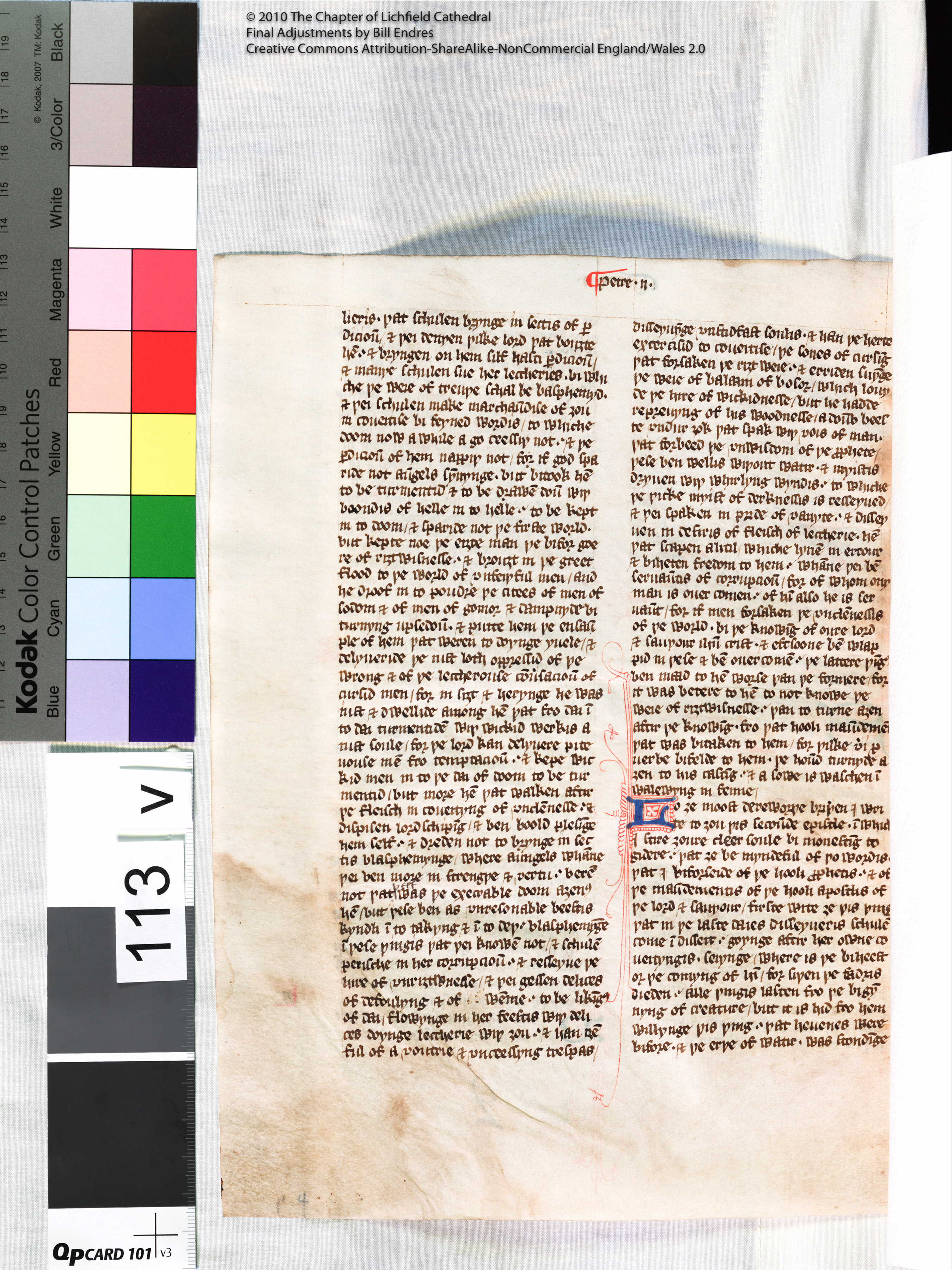
- c. 1395, John Wycliffe, John Purvey [et al.], transl., Bible (Wycliffite Bible (later version), MS Lich 10.), published c. 1410, Petre ·ii· 2:15, folio 113, verso, column 1; republished as Wycliffe's translation of the New Testament, Lichfield: Bill Endres, 2010:
- […] þat foꝛſaken þe riȝt weie .· ⁊ erriden ſuynge þe weie of balaam of boſoꝛ / which louyde þe hire of wickidneſſeCategory:Middle English terms with quotations#HIRE
- […] who've abandoned the right way and strayed, following the way of Balaam of Bosor, who loved the fruits of wrongdoing.
- A payment; a charge.
Related terms
Descendants
References
- “hīr(e, n.”, in MED Online, Ann Arbor, Mich.: University of Michigan, 2007.
Etymology 4
Noun
hireCategory:Middle English alternative forms#HIRECategory:Middle English entries with incorrect language header#HIRECategory:Pages with entries#HIRECategory:Pages with 9 entries#HIRE
- alternative form of here (“army”)
Etymology 5
Noun
hireCategory:Middle English alternative forms#HIRECategory:Middle English entries with incorrect language header#HIRECategory:Pages with entries#HIRECategory:Pages with 9 entries#HIRE
- (SomersetCategory:Somerset Middle English#HIRE) alternative form of iren
Etymology 6
Verb
hireCategory:Middle English alternative forms#HIRECategory:Middle English entries with incorrect language header#HIRECategory:Pages with entries#HIRECategory:Pages with 9 entries#HIRE
- alternative form of hiren (“to hire”)
Norwegian Nynorsk
Adjective
hireCategory:Norwegian Nynorsk non-lemma forms#HIRECategory:Norwegian Nynorsk adjective forms#HIRECategory:Norwegian Nynorsk entries with incorrect language header#HIRECategory:Pages with entries#HIRECategory:Pages with 9 entries#HIRE
Old English
Alternative forms
Pronunciation
Pronoun
hireCategory:Old English lemmas#HIRECategory:Old English pronouns#HIRECategory:Old English entries with incorrect language header#HIRECategory:Pages with entries#HIRECategory:Pages with 9 entries#HIRE
Descendants
Old Frisian
Alternative forms
Determiner
hireCategory:Old Frisian lemmas#HIRECategory:Old Frisian determiners#HIRECategory:Old Frisian possessive determiners#HIRECategory:Old Frisian entries with incorrect language header#HIRECategory:Pages with entries#HIRECategory:Pages with 9 entries#HIRE
Pronoun
hireCategory:Old Frisian lemmas#HIRECategory:Old Frisian pronouns#HIRECategory:Old Frisian entries with incorrect language header#HIRECategory:Pages with entries#HIRECategory:Pages with 9 entries#HIRE
Declension
| nominative | accusative | dative | genitive | |||
|---|---|---|---|---|---|---|
| singular | 1st person | ik | mī | mī | mīn | |
| 2nd person | thū | thī | thī | thīn | ||
| 3rd person |
m | hī | hine | him | sīn | |
| f | hiū, hiō | hiā | hire, hiāre | hire, hiāre | ||
| n | hit | hit | him | sīn | ||
| plural | 1st person | wī | ūs | ūs | ūser | |
| 2nd person | jī | jū, jō | jū, jō | jūwer | ||
| 3rd person | hiā | hiā | him, hirem, hiārem | hira, hiāra | ||